
Dvele Garage Conversion ADU: The Rancho Cucamonga Owner’s Guide
We stock and install Dvele-compatible garage conversion ADU systems in Rancho Cucamonga, with typical installed pricing running $85,000-$145,000 all-in from permit set through final inspection. Most Dvele garage conversion ADU failures we see trace back to three components: the integrated HVAC mini-split line set, the smart electrical panel, or the moisture-barrier flashing at the garage slab edge. If your unit is throwing error codes, cycling humidity poorly, or showing wall staining at the foundation line, the part is likely failing and the fix is not a hardware-store run.
Homeowners usually discover the problem in one of two ways. Either the Dvele app starts logging temperature or humidity anomalies that do not match the thermostat setting, or they notice staining or soft spots where the factory-built wall panel meets the existing garage slab. Both symptoms worsen quickly in Rancho Cucamonga’s inland heat and Santa Ana wind cycles, which stress seals and flex flashing tape in ways the coastal California designs sometimes underestimate.
Which Dvele Models This Applies To
Dvele produces several series of factory-built modules used in garage conversion ADU configurations, and the parts we stock correspond to the 2021-2024 production runs most common in Southern California. The identifying mark is the serial plate inside the electrical panel door: a “GC-” prefix indicates garage-conversion-specific framing and slab-anchoring hardware, while detached ADU units carry an “ND-” prefix with different foundation brackets entirely. We have replaced components on GC-1, GC-2, and the transitional GC-2R models in Rancho Cucamonga and surrounding San Bernardino County cities.
The OEM-versus-aftermarket question for Dvele is specific. The smart electrical panel and the proprietary thermostat bus are factory-locked to Dvele firmware; aftermarket equivalents will communicate but will not pass the remote-monitoring handshake that Dvele uses for warranty coverage. For line sets, flashing, and structural fasteners, we use aftermarket equivalents rated to the same ASTM and California Title 24 specs, documented in your permit set so the inspector sees equivalence, not substitution. Nadia Ellery reviews every parts list personally before we order; mismatched firmware revisions are the single most expensive callback we avoid.
Signs Your Dvele Garage Conversion ADU Is Failing
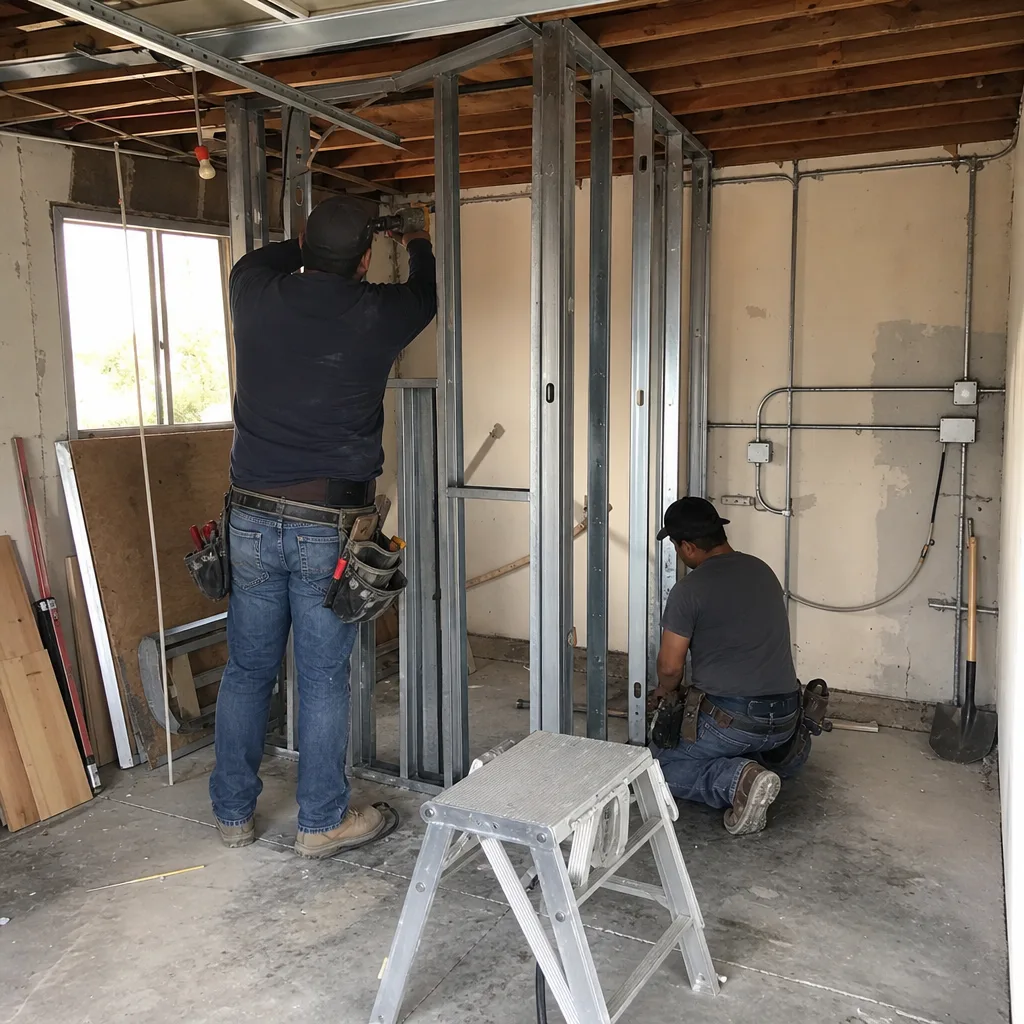
- Smart panel throwing “Communication Fault” or cycling breakers. The Dvele panel uses a proprietary bus to coordinate HVAC, lighting, and leak detection. A failing bus module will trip randomly or lose remote access first. In Rancho Cucamonga’s summer heat, we see this when the panel enclosure was mounted without adequate clearance to the garage’s unconditioned air, accelerating capacitor fatigue.
- Mini-split runs constantly but cannot hold setpoint. This usually means a refrigerant leak at the flare connection where Dvele’s factory line set meets the field-installed stub. The leak is slow, the oil migrates, and the compressor eventually locks out. We pressure-test both sides and replace the full line set rather than patch, because patched flares fail again within two seasons in this climate.
- Wall staining or mustiness at the slab perimeter. Dvele’s vapor barrier relies on a peel-and-stick membrane at the panel base. If the existing garage slab was not scarified clean before install, or if Rancho Cucamonga’s hardpan clay pushed moisture upward through capillary action, the membrane delaminates. The fix is removal, slab prep, and reinstallation with a compatible secondary flashing.
- Door or window operation binding seasonally. Factory-built modules settle differently than stick framing. If the steel frame is bearing on an uneven slab, thermal expansion in Rancho Cucamonga’s 40-degree summer-winter swing warps the openings. We shim and re-anchor to the Dvele spec, not guess.
- App shows phantom water usage or leak alerts. The leak-detection mesh is embedded in the subfloor. A single failed sensor node floods the system with false positives. We isolate the node, verify with a secondary moisture meter, and replace only the affected loop.
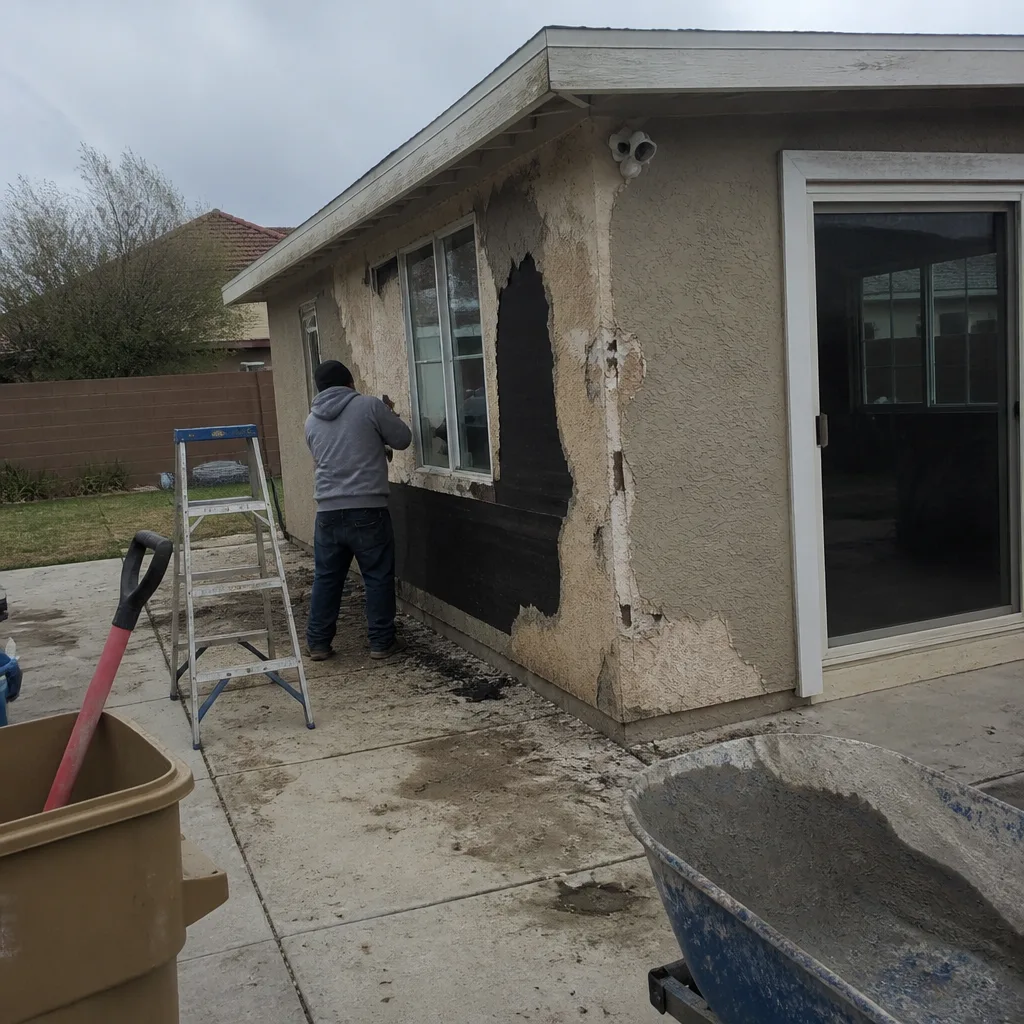 Before
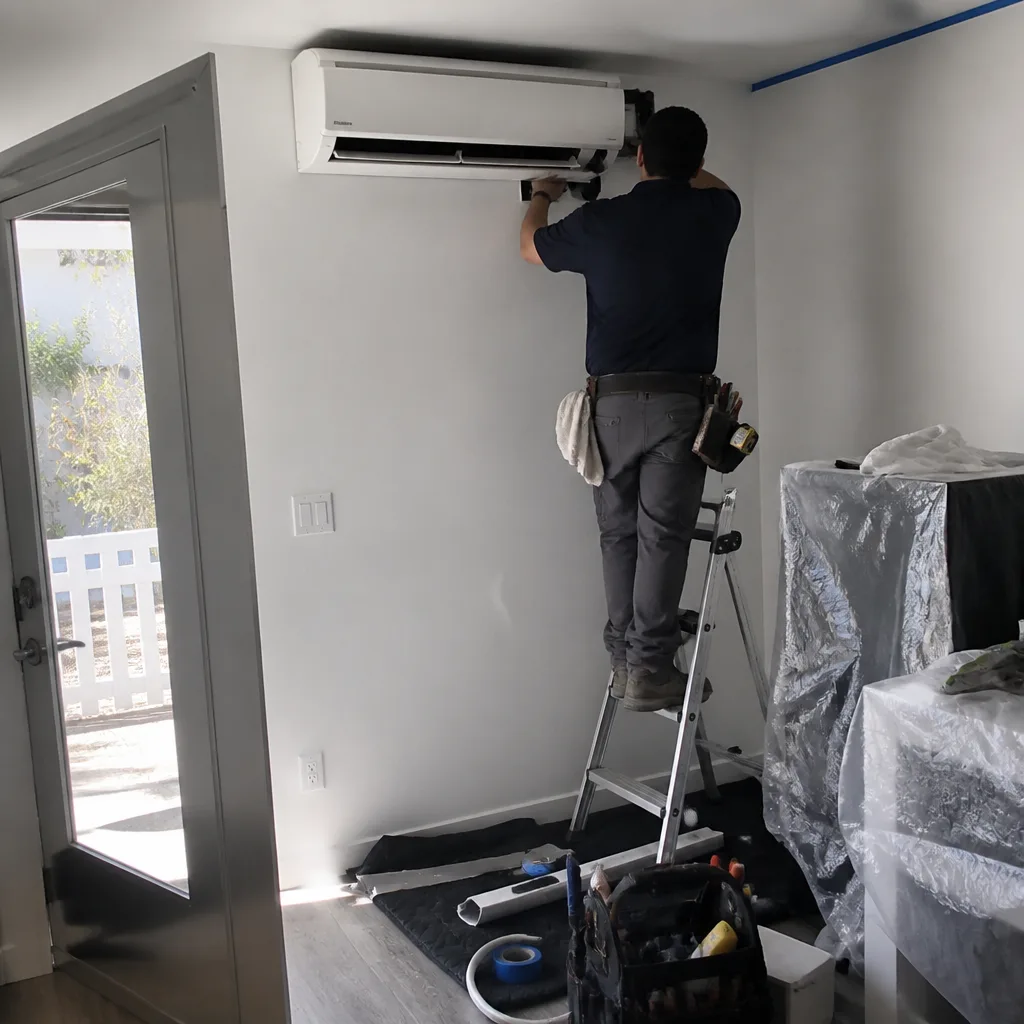 After
AfterReplacement Cost & What’s Included
| Component | Parts & Labor Range | Typical Timeline |
|---|---|---|
| Smart electrical panel / bus module | $3,200 - $5,800 | 1-2 days |
| Mini-split line set replacement | $2,400 - $4,100 | 1 day |
| Slab-edge flashing & membrane repair | $4,800 - $8,500 | 2-3 days |
| Structural re-anchor & shim | $1,800 - $3,400 | 1 day |
| Leak-detection sensor loop | $1,100 - $2,200 | Half day |
These are installed prices for Rancho Cucamonga, inclusive of permit amendment if the repair touches structure or electrical, which most do. The range reflects slab condition, access for the mini-split condenser, and whether the original install documentation is available. Under Haven Standard Clause 1, the written price you receive before work starts is the price you pay; no change orders for conditions we could have observed. Every repair carries our 365-Day Done Right Promise, documented in writing.
DIY or Call Us?
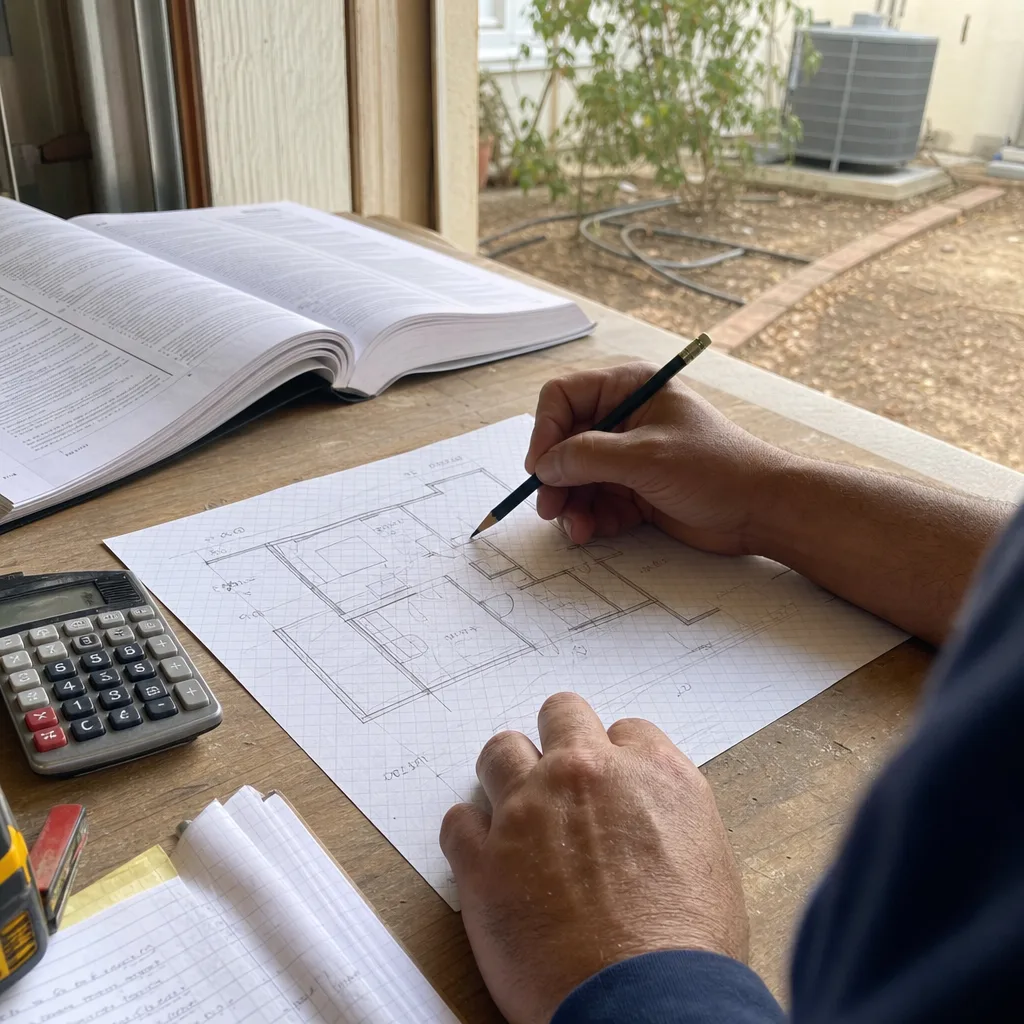
There is a safe middle ground and a hard stop. Homeowners can check the Dvele app for error code history, verify that the condenser pad outside is level and clear of debris, and photograph any staining for our review. What we do not recommend: opening the smart panel, adding refrigerant, or cutting flashing. The panel carries live bus voltage even with breakers off; refrigerant handling requires EPA 608 certification in California; and compromised flashing, once disturbed, is difficult to reseal without the factory-spec tape and primer.
We carry Dvele-compatible bus modules, line sets, and flashing assemblies on our Rancho Cucamonga truck. Most diagnostics take under an hour, and we bring the photo documentation so you see what we found, not what we say we found. Call (909) 506-1121 to schedule your free estimate.
FAQs
With proper install and maintenance, the core structure exceeds 50 years; the active systems we replace typically run 12-18 years before major component failure in this inland heat and Santa Ana wind exposure. The mini-split line set is usually the first to go, at 10-14 years, because thermal cycling fatigues the flare joints faster than coastal climates. Call (909) 506-1121 for an exact quote on preventive inspection - estimates are free.
Sometimes the bus module alone fails while the main enclosure is sound; a module swap runs $1,400-$2,200 versus full panel replacement. But Dvele does not sell modules separately to homeowners, and firmware pairing requires factory-authorized tools. We evaluate on site and tell you which path applies. Call (909) 506-1121 for an exact quote - estimates are free.
Most single-component replacements finish in one working day; slab-edge flashing repair runs two to three days because the membrane must cure before we seal the panel base. We coordinate Rancho Cucamonga inspections around your schedule, not ours, and the permit amendment is included in our scope. Call (909) 506-1121 to schedule your free estimate.
We stock bus modules, line sets, compatible flashing, and sensor loops on our Rancho Cucamonga truck for same-day diagnosis and next-day install on confirmed failures. Specialty Dvele-firmware panels ship from the factory in 5-7 business days; we pre-order based on your serial number to shorten that window. Call (909) 506-1121 to confirm availability for your model.
Ellery ADU Studio Rancho Cucamonga is an independent service provider; we are not affiliated with Dvele. We also specify and coordinate parts for Abodu and Cover systems under the same single-contract model.
Written by Nadia Ellery, Owner & Principal Designer, Ellery ADU Studio at Ellery ADU Studio Rancho Cucamonga, serving Rancho Cucamonga and nearby areas.