
James Hardie Junior ADU Conversion: The Rancho Cucamonga Owner’s Guide
James Hardie junior ADU conversions in Rancho Cucamonga typically run $95,000-$165,000 all-in, from permit-ready drawings through final inspection, with the HardieZone 10 product line specified for our Inland Empire heat and Santa Ana wind cycles. We stock and coordinate James Hardie HardiePanel vertical siding, HardieShingle staggered-edge panels, and ColorPlus Technology trim systems for same-week specification on junior ADU projects. Most owners discover their existing siding or trim system is failing when interior drywall shows moisture staining near the conversion’s new kitchen or bath wet walls, or when a garage-to-JADU conversion reveals the original structure was never wrapped with a weather-resistive barrier.
Which James Hardie Models This Applies To
We specify James Hardie products by climate zone, not just aesthetics. Rancho Cucamonga sits in HardieZone 10, which means HZ5 products engineered for freeze-thaw cycles are the wrong spec entirely. The correct line is HZ10: lower water absorption, higher UV resistance, and dimensional stability at sustained 100°F plus.
For junior ADU conversions specifically, we coordinate three James Hardie systems:
- HardiePanel Vertical Siding - 4×8, 4×9, and 4×10 sheets in Cedarmill, Smooth, and Stucco textures. The 5/16-inch thickness works with standard 24-inch stud spacing common in garage conversions.
- HardieShingle Staggered-Edge Panel - 48-inch panels that read as individual shingles, used for gable ends and accent walls where the JADU needs to match existing Craftsman or Ranch architecture.
- ColorPlus Technology trim and soffit - pre-finished boards in Arctic White, Sail Cloth, or custom-matched colors. The baked-on finish carries a 15-year limited warranty against fading, critical in Rancho Cucamonga’s 280-plus annual days of sun exposure.
Identification is straightforward: original James Hardie products carry a stamped manufacturing date and HZ zone rating on the back face. Aftermarket fiber-cement competitors often lack the HZ designation entirely, or carry a generic “west” label that does not account for our specific thermal expansion range. We do not specify aftermarket fiber-cement on JADU conversions. The OEM product costs roughly 12-18% more per square foot, but the warranty transfers to the homeowner and the dimensional stability prevents the callback pattern we have seen with uncertified substitutes, particularly at rake boards and inside corners where thermal movement concentrates.
Signs Your James Hardie Junior ADU Conversion Is Failing
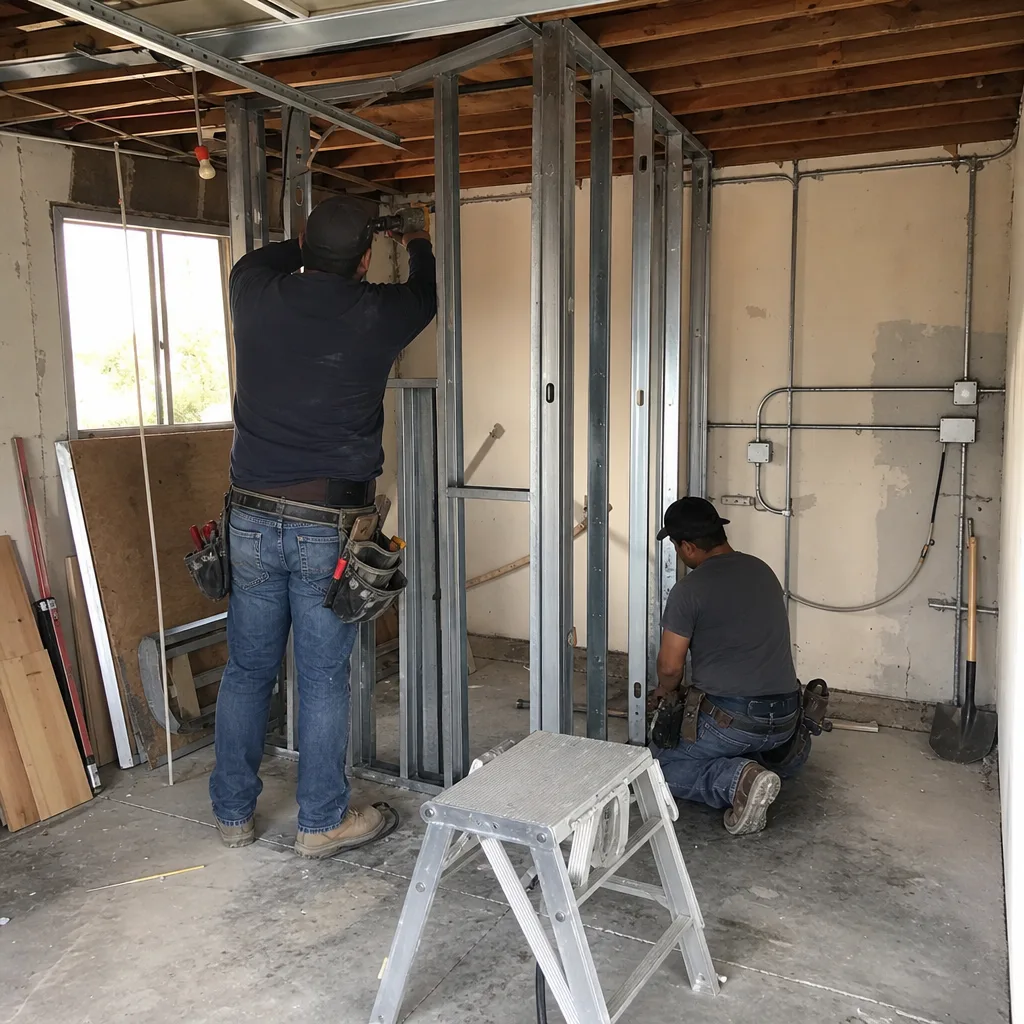
- Edge checking and crumbling at cut ends. Fiber-cement is stable; the failure is usually installation error. If the original installer used a standard wood blade instead of a James Hardie-approved polycrystalline diamond-tipped blade, the cut face micro-fractured. Moisture wicks in, freeze-thaw (even our mild winters) opens the crack, and the board swells from the inside out. We see this most on conversions where the previous owner DIY’d the garage finish.
- Fastener pops with rust streaking. James Hardie specifies hot-dipped galvanized or stainless steel nails, ring-shank, 0.090-inch minimum shank diameter. Standard roofing nails or electro-galvanized fasteners corrode; the rust expands, pushes the fastener head proud, and breaks the seal. On JADU conversions, this typically appears first on south and west walls where thermal cycling is most aggressive.
- ColorPlus chalking or uneven fade. The baked finish fails when stored flat before installation (trapped moisture), or when power-washed above 1,500 PSI. In Rancho Cucamonga, we also see premature fade on walls with reflected heat from concrete driveways or light-colored neighbor stucco. The color shift is cosmetic, but it signals that the UV barrier is compromised and substrate protection is thinning.
- Soft spots behind the mudsill or at the ledger attachment. Junior ADU conversions often add a kitchen or bath where the garage slab meets the original house wall. If the WRB (weather-resistive barrier) was not lapped correctly over the James Hardie panel bottom edge, or if the panel was installed tight to concrete without the required 1/4-inch clearance, wicking occurs. The panel face looks fine; the back face is deteriorated.
- Interior humidity spikes with no obvious leak. Fiber-cement is breathable, not a vapor barrier. In a JADU conversion with new insulation and airtight drywall, the assembly can trap moisture if the original James Hardie was specified without the required rainscreen or if the permeance rating of the WRB was wrong for the assembly. We test with a moisture meter at the bottom plate; readings above 18% trigger a full siding review.
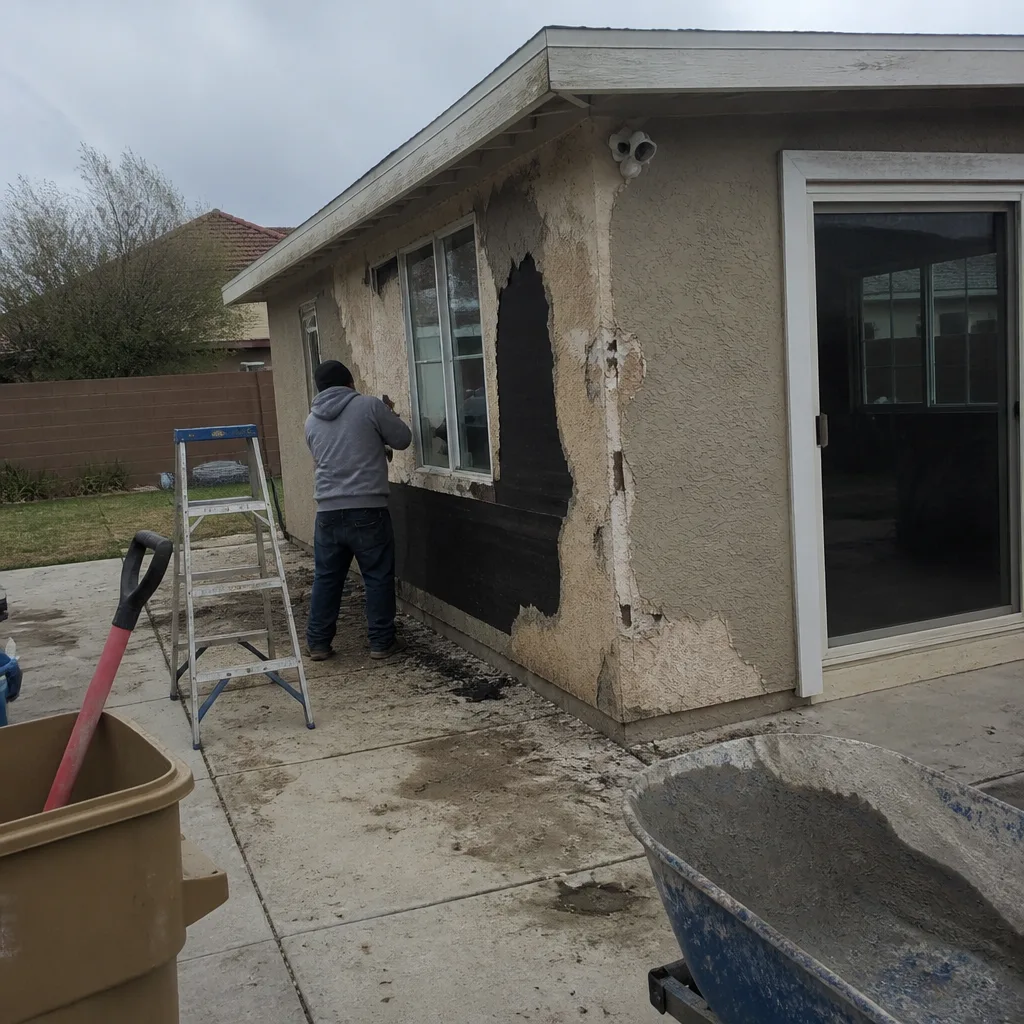 Before
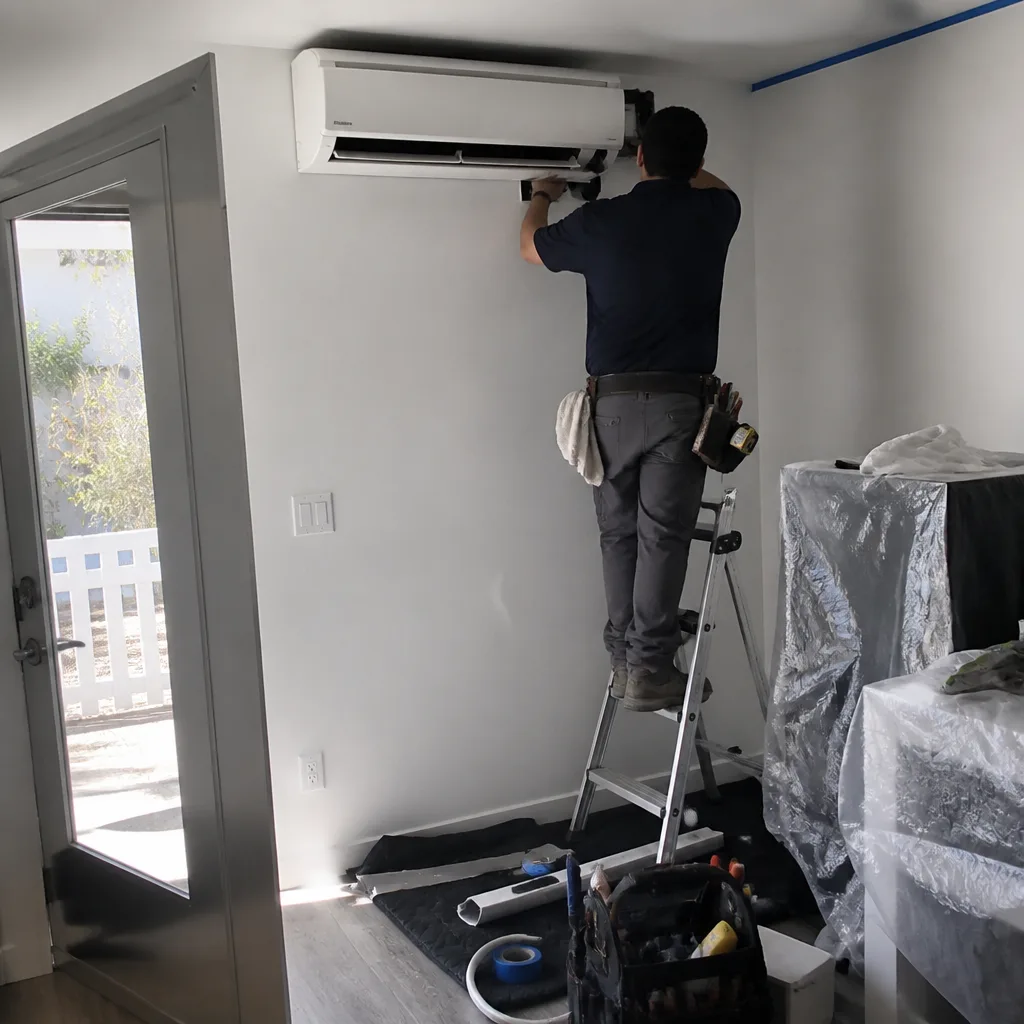 After
AfterReplacement Cost & What’s Included
Junior ADU siding replacement in Rancho Cucamonga runs $18-$32 per square foot installed for James Hardie HZ10 products, with the range driven by three factors: accessibility (scaffold vs. ladder), the extent of WRB replacement behind the failed panels, and whether the conversion requires matching a discontinued ColorPlus shade.
Our line-item structure, per Haven Standard Clause 1, is fixed at signing:
- James Hardie HZ10 panels or shingles: $6.50-$9.75/sq ft material
- ColorPlus trim and fascia: $4.25-$6.00/linear ft
- WRB replacement (Tyvek CommercialWrap or equivalent): $2.75-$4.50/sq ft
- Labor, including scaffold, demo, and disposal: $8.50-$14.00/sq ft
We do not quote per-square-foot alone. Every JADU siding scope includes a documented photo record of the existing condition, a written moisture assessment, and the 365-Day Done Right Promise. If the finished work does not match the permitted drawings and material schedule, we make it right. The document you receive before we pull permits is the same document that protects you if anything goes sideways. That is not a courtesy - it is the baseline.
DIY or Call Us?
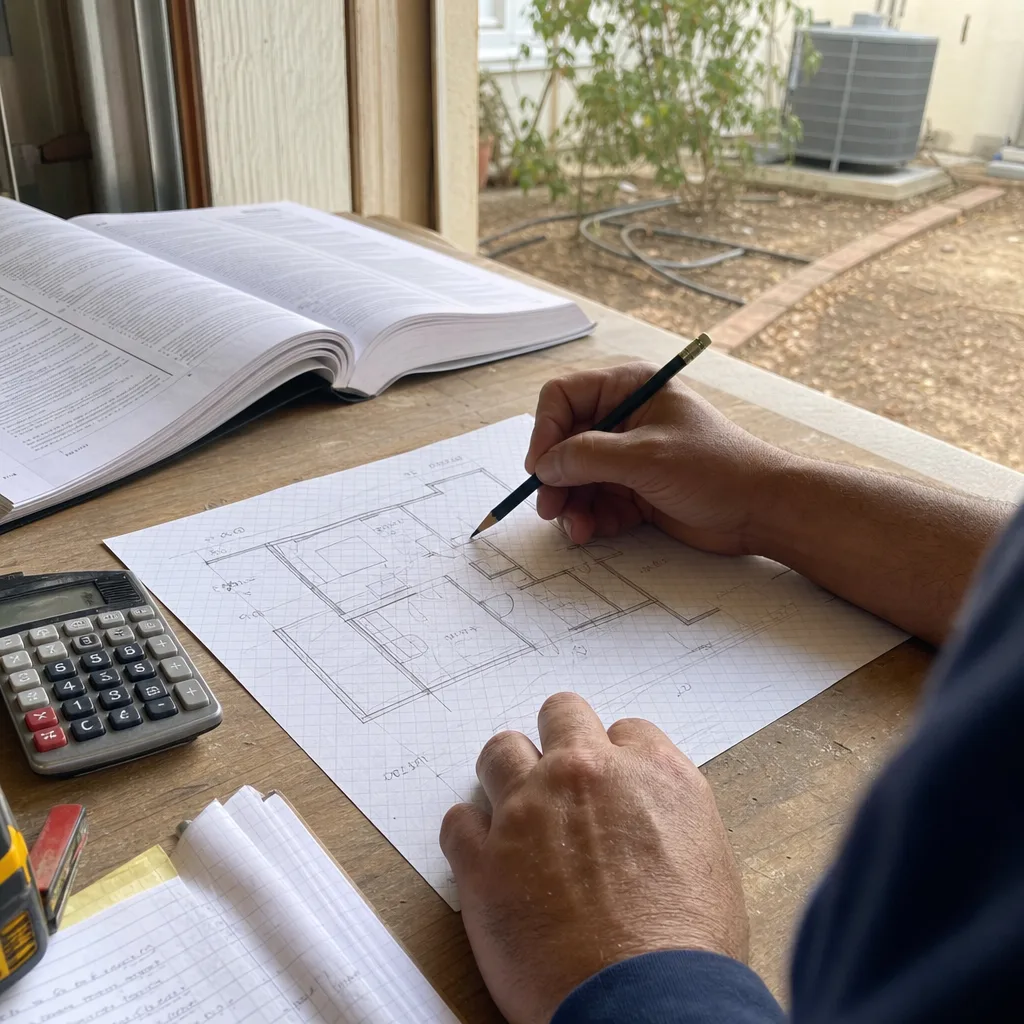
There is no safe DIY path for a full James Hardie junior ADU conversion. The product itself demands specialized cutting equipment (silica dust is a documented carcinogen; OSHA requires wet-cutting or HEPA vacuum systems), and the assembly is only as good as the WRB detailing behind it. What an owner can safely check: confirm fastener heads are seated flush with no rust streaking, verify ColorPlus finish is uniform with no chalking, and look for the James Hardie HZ10 stamp on any exposed cut edge.
Where DIY goes wrong: cutting fiber-cement with a standard circular saw creates respirable silica and voids the product warranty; nailing patterns are species-specific and must follow the printed schedule exactly; and the WRB laps and flashing integrations at windows, doors, and the new JADU kitchen vent are where we find 90% of the moisture damage. These are not finish details. They are structural to the assembly’s performance. Call (909) 506-1121 to schedule your free estimate. We will bring the material samples, the moisture meter, and the permit history for your specific Rancho Cucamonga tract.
FAQs
James Hardie warranties fiber-cement siding for 30 years and ColorPlus finish for 15 years. In Rancho Cucamonga’s HardieZone 10 climate, we expect 25-30 years on the substrate and 12-15 years on the factory finish before recoating is needed. The southwest-facing walls typically show fade first. Call (909) 506-1121 for an exact quote - estimates are free.
Localized repair is possible if the damage is limited to one or two panels and the original ColorPlus shade is still in production. The challenge is matching: even within the same color name, batch variation is visible on large wall planes. For JADU conversions where the new unit must blend with the primary residence, we typically recommend replacing the entire wall plane to eliminate the patch line. Call (909) 506-1121 for an exact quote - estimates are free.
A single-wall replacement on a typical 400-square-foot JADU takes 3-5 working days: one day for scaffold and moisture assessment, one day for demo and WRB installation, two days for panel and trim installation, and one day for sealant and detail review. Full-envelope replacement on a detached JADU runs 10-14 days. We pull permits for all siding work in Rancho Cucamonga; inspection scheduling adds 2-3 days typically.
We do not stock full panels - they are job-ordered to color and texture - but we maintain running relationships with the James Hardie distribution center in Ontario, and we spec from their active production schedule, not discontinued inventory. ColorPlus orders typically deliver in 7-10 business days; primed-only panels in 3-5. We coordinate delivery to coincide with our scaffold setup to minimize site duration. Call (909) 506-1121 for an exact quote - estimates are free.
Ellery ADU Studio Rancho Cucamonga is an independent design-build studio; we are not affiliated with James Hardie. We also specify and coordinate prefab and modular systems from Abodu, Cover, and Dvele within the same single-contract model.
Written by Nadia Ellery, Owner & Principal Designer, Ellery ADU Studio at Ellery ADU Studio Rancho Cucamonga, serving Rancho Cucamonga and nearby areas.