
Title 24 Energy Compliance in Rancho Cucamonga, CA
Title 24 energy compliance is a California Building Standards Code requirement that every new ADU, garage conversion, and interior conversion in Rancho Cucamonga must satisfy before the city issues a building permit. The compliance report documents that your ADU’s insulation, glazing, mechanical systems, and lighting meet the California Energy Commission’s current energy budget – without it, the permit set is incomplete and the city will not move forward. At Ellery ADU Studio Rancho Cucamonga, we produce the Title 24 compliance report in-house as part of the full ADU Design & Permitting in Rancho Cucamonga permit set, so there is no third-party energy consultant to coordinate, no back-and-forth between separate firms, and no blame gap when the numbers need to be revised.
If you have questions about where your project stands, a live person at (909) 506-1121 can walk you through what the compliance report covers and what it costs – no voicemail queue, no callback that may or may not materialize.
What Title 24 Energy Compliance Actually Covers
The short answer: it covers the building envelope, the mechanical systems, and the lighting. But in practice, what that means for an ADU in Rancho Cucamonga is more specific than the code language suggests, which is why our ADU Design & Permitting services include climate-specific compliance from the start.
Rancho Cucamonga sits in California Climate Zone 10 – a designation that matters more than most homeowners realize. Zone 10 runs hot in summer (the Inland Empire regularly logs 100-plus-degree days from June through September) and cool enough in winter to require meaningful heating loads. That dual demand means the energy compliance model has to balance cooling efficiency and heating efficiency at the same time, which tends to push the required insulation values and HVAC specifications higher than what you’d see in a coastal Zone 6 or Zone 7 project. A report templated for a San Diego ADU will not pass for a Rancho Cucamonga ADU – the climate inputs are different, and the city’s plan checker will catch it.
The compliance calculation is run through the California Energy Commission’s CBECC-Res software (or an approved equivalent). The output is a CF1R form – the certificate of compliance – that becomes part of the permit set. Once construction is underway, the installer signs a CF2R (installation certificate) confirming what was actually installed, and the HERS rater signs a CF3R (verification certificate) after field testing. All three documents are required before the city issues a final inspection sign-off.
Here is what the calculation specifically evaluates:
- Insulation levels (R-values) for walls, ceiling/roof assembly, and floor or slab, calibrated to Zone 10 minimums
- Window and door U-factor and SHGC (solar heat gain coefficient) – in Zone 10, the SHGC limit is tighter than in cooler zones because of summer solar exposure
- HVAC system efficiency, including minimum SEER2 ratings for cooling and HSPF2 or AFUE for heating, plus duct leakage targets if ducts run through unconditioned space
- Water heating, including whether the unit qualifies for a standard tank, a heat pump water heater, or a solar-ready provision
- Lighting, including high-efficacy fixture requirements in every room
- Mandatory measures such as whole-house ventilation, air sealing targets, and thermostat controls – items that are required regardless of the performance compliance path chosen
For prefab and modular ADUs – a growing share of what we specify in Rancho Cucamonga – the compliance picture has an added layer. A unit from Plant Prefab, for example, arrives with factory-documented insulation and glazing specs. Those factory specs still have to be run through the CBECC-Res model against Zone 10 parameters. We handle that reconciliation as part of the same contract, because it is the same project.
When You Need Title 24 Energy Compliance
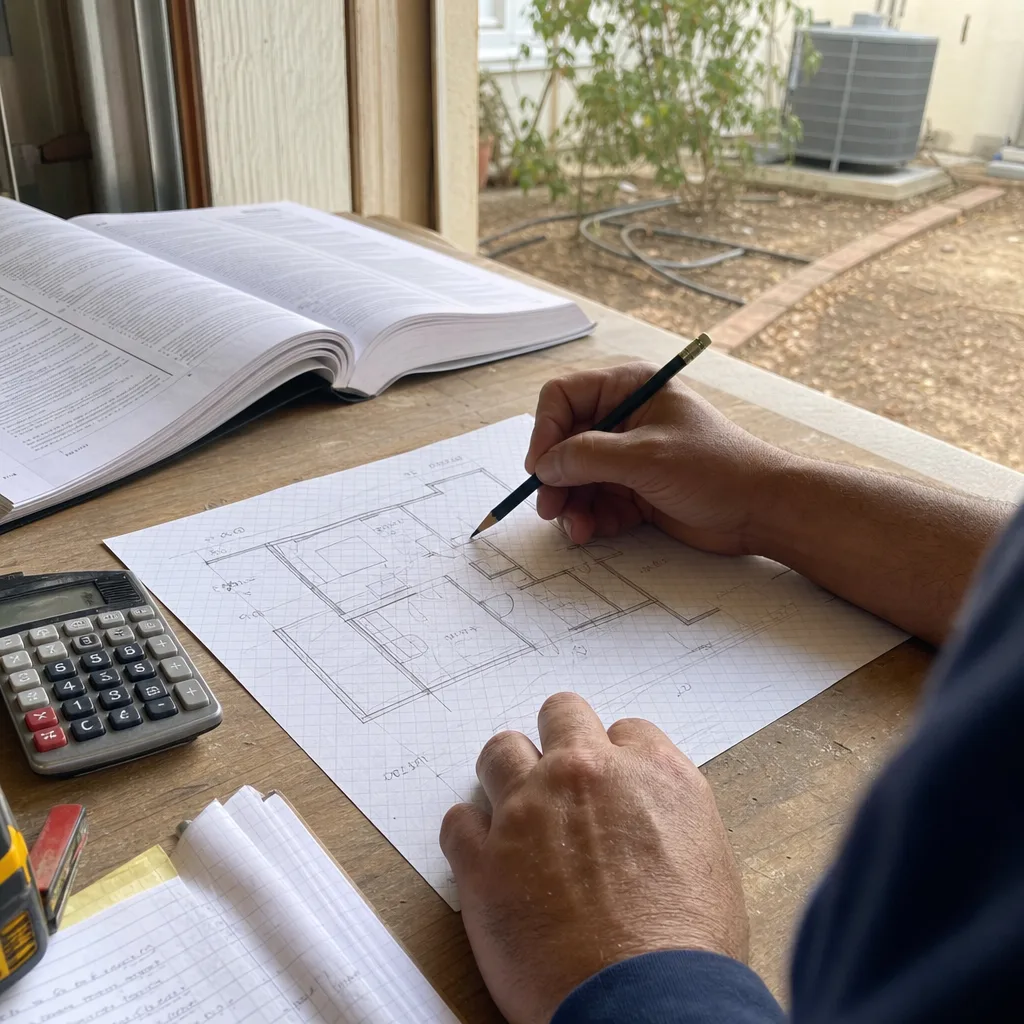
- You are adding a new detached ADU on your Rancho Cucamonga lot. Any new conditioned structure requires a compliance report. There are no square-footage minimums – even a 300-square-foot studio triggers the requirement.
- You are converting an attached or detached garage into a living space. The moment you add insulation, HVAC, and electrical to a previously unconditioned garage, Title 24 applies to the converted area. We see this regularly in the older neighborhoods around Alta Loma and Etiwanda, where detached two-car garages are common and conversion is often the fastest permitted path.
- You are building a Junior ADU (JADU) from an existing bedroom or interior space. A JADU that adds or alters conditioned space, changes the window configuration, or modifies the mechanical system typically requires at least a partial compliance analysis.
- Your permit application was rejected or placed on hold for a missing or non-compliant CF1R. This happens when homeowners attempt to file a permit set without an energy consultant or use a report not calibrated to Rancho Cucamonga’s Climate Zone 10 conditions.
- You received a compliance report from a previous designer that does not match your revised plans. If the drawings changed after the report was run – different window sizes, a relocated HVAC unit, a modified roof assembly – the report is no longer valid and must be recalculated. Filing stale compliance documents is one of the more common reasons ADU permits stall in San Bernardino County plan check.
- You are specifying a modular or panelized unit (Mighty Buildings, Plant Prefab, or similar) and the manufacturer’s documentation does not yet reflect Zone 10 inputs. Factory specs are not automatically compliant – they need to be translated into a jurisdiction-specific CF1R.
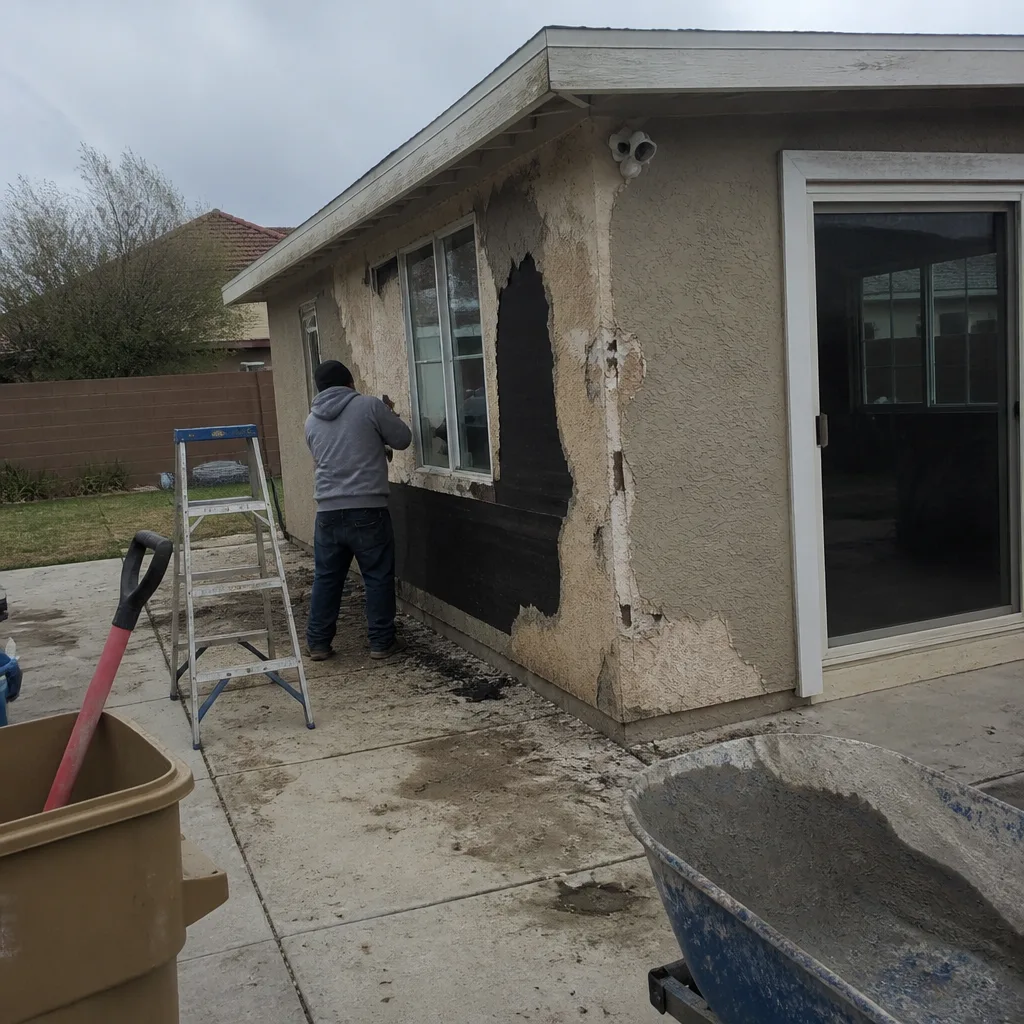 Before
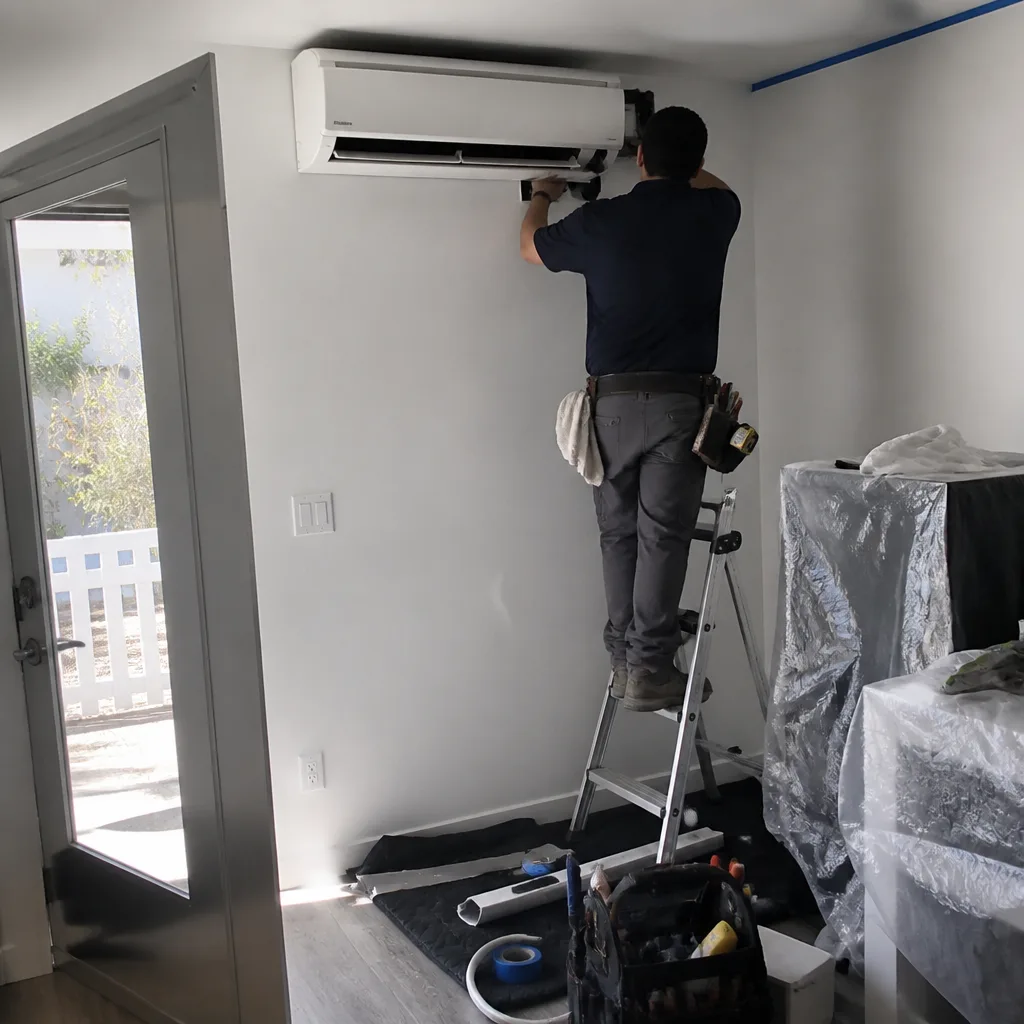 After
AfterOur Title 24 Energy Compliance Process
- Site and plan review. Before we run any numbers, we review the architectural drawings for the project – floor plan, sections, window schedule, and preliminary HVAC layout. We note the orientation of the structure on the lot (south-facing glazing carries a different SHGC penalty than north-facing in Zone 10), the proposed roof assembly, and any site-specific shading from existing trees or adjacent structures. This is not a checklist step; it is the difference between a report that passes the first time and one that goes back for corrections.
- Climate Zone 10 compliance modeling. We run the project through CBECC-Res using the confirmed Zone 10 weather file. We test the prescriptive path first – if the project meets all prescriptive minimums for insulation, glazing, and equipment, the report is straightforward. If the prescriptive path is not achievable given the design (common on conversions with limited wall depth or existing framing), we model the performance path, which allows tradeoffs between envelope and mechanical efficiency to reach the required compliance margin.
- CF1R production and permit set integration. The compliance report is not a separate deliverable handed off to a permit runner. It is formatted, page-numbered, and inserted into the permit set that goes to the City of Rancho Cucamonga Building and Safety Division alongside the architectural drawings, structural calculations, and site plan. The plan checker receives a complete package.
- Plan check response (if required). If the city’s plan checker comes back with a Title 24 correction – a revised U-factor, an equipment efficiency note, an air sealing clarification – we address it without a change order. Responding to plan check comments on the compliance documentation is part of the scope.
- CF2R and CF3R coordination during construction. Once the permit is issued and construction begins, we coordinate the installation certificate (CF2R) with the trade contractors and arrange the HERS rater field verification (CF3R) needed for final inspection. The 365-Day Done Right Promise means that if the finished ADU does not match the permitted drawings and compliance specifications, we make it right – in writing, before the project starts.
- Final inspection support. We prepare the homeowner and the general contractor for what the city inspector will check specifically related to the energy compliance items: window labels, insulation certifications, HVAC equipment data plates, and the posted CF1R. We have seen final inspections delayed in Rancho Cucamonga because a required document was in a file somewhere rather than physically on site – that does not happen on our projects.
Title 24 Energy Compliance Pricing in Rancho Cucamonga
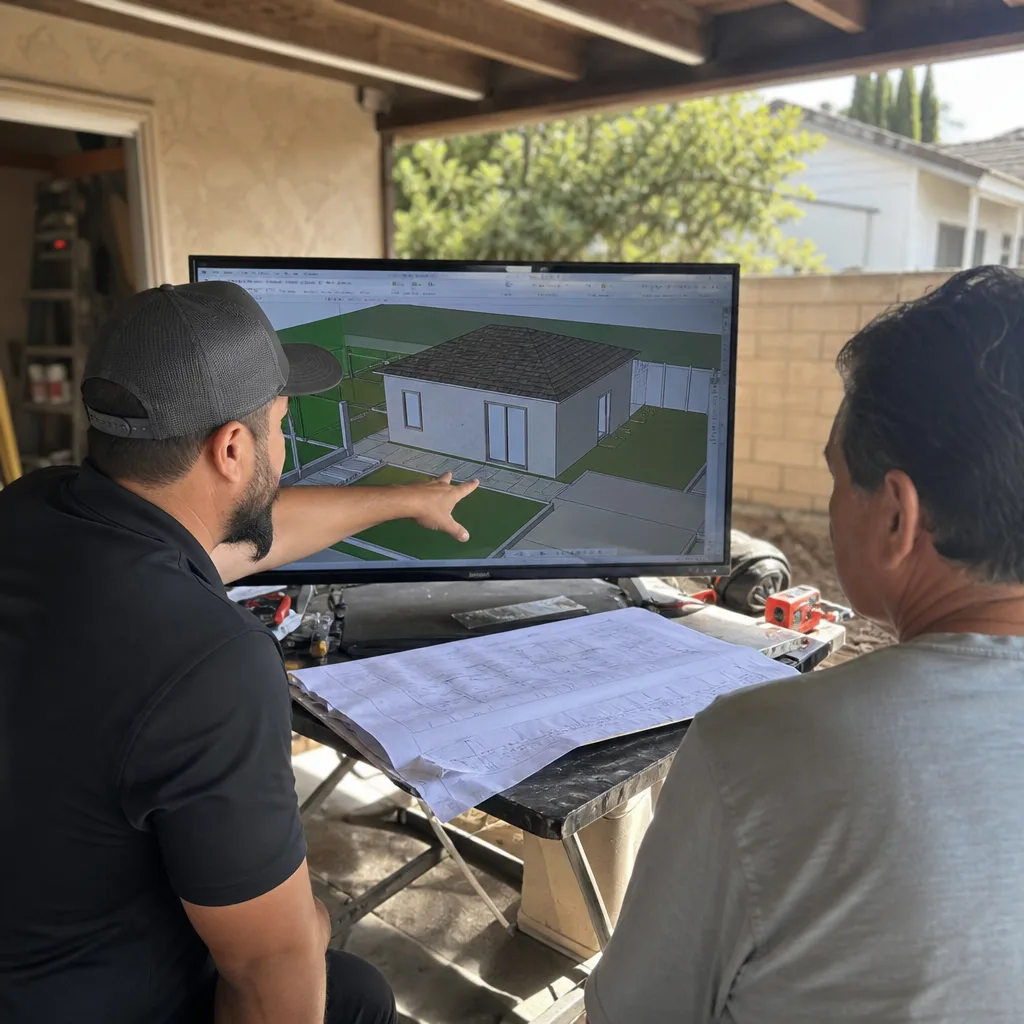
Title 24 energy compliance in Rancho Cucamonga typically adds $800 to $2,200 to the design and permitting cost, depending on project scope. That range reflects the difference between a straightforward new detached ADU with a clean design (lower end) and a garage conversion where the existing framing limits insulation options and the performance path modeling takes additional iterations (higher end). Prefab units with manufacturer documentation that requires Zone 10 reconciliation generally fall in the middle of that range.
Here is how the cost breaks down by project type:
| Project Type | Typical Title 24 Cost Range | Notes |
|---|---|---|
| New Detached ADU (prescriptive path) | $800 – $1,200 | Clean design, Zone 10 prescriptive minimums met without performance modeling |
| New Detached ADU (performance path) | $1,100 – $1,800 | Requires iterative modeling to achieve compliance margin; common with larger glazing areas |
| Garage Conversion ADU | $1,000 – $2,200 | Existing framing often limits wall R-value; performance path modeling frequently required |
| Junior ADU / Interior Conversion | $600 – $1,200 | Partial compliance analysis; depends on scope of mechanical and window changes |
| Prefab / Modular Unit (Zone 10 reconciliation) | $900 – $1,600 | Factory specs must be run against Zone 10 weather file; documentation reconciliation included |
What affects cost most: the number of modeling iterations required to reach compliance, the complexity of the mechanical system, and whether the project involves reconciling manufacturer documentation for a prefab unit. Projects with straightforward designs, standard insulation depths, and off-the-shelf HVAC equipment rarely land at the high end of these ranges.
Every Ellery ADU Studio project is quoted at a written price before any work begins – that is Haven Standard Clause 1, and it applies to the energy compliance scope the same as it applies to the structural drawings. You will see the Title 24 line item in the written quote before you sign anything. Under Haven Standard Clause 5 (No Surprises), the scope is locked at signing; if the city requires a compliance revision during plan check, we handle it within the quoted scope.
For a written price on your specific project, call (909) 506-1121. A live person will answer, get the basic project details, and give you a written estimate – not a range pulled from a website, but a number tied to your lot, your structure, and your city.
FAQs – Title 24 Energy Compliance
Is Title 24 compliance required for every ADU in Rancho Cucamonga, even small ones?
Yes – every new conditioned ADU in Rancho Cucamonga requires a Title 24 compliance report regardless of size. A 280-square-foot studio ADU triggers the same requirement as a 1,200-square-foot two-bedroom unit. The California Energy Code does not have a square footage exemption for ADUs, and the City of Rancho Cucamonga Building and Safety Division will not approve a permit application that is missing the CF1R certificate of compliance. The only scenario where Title 24 compliance may be limited in scope is a Junior ADU conversion that makes no changes to the existing mechanical system or window configuration – and even then, most jurisdictions require at minimum a partial analysis. Call (909) 506-1121 for a straight answer on your specific project type.
What is a HERS rater and why is one required?
A HERS rater is a California Home Energy Rating System field verifier, certified by the California Energy Commission, who physically inspects and tests specific installations during and after construction to confirm they match what the compliance report specified. In Rancho Cucamonga, HERS verification is typically required for duct leakage (if ducts run through unconditioned space), refrigerant charge on split-system HVAC equipment, and sometimes window installation in high-SHGC scenarios. The rater signs the CF3R form, which is one of the documents required before the city will issue a final inspection sign-off. Ellery ADU Studio coordinates HERS rater scheduling as part of the construction phase – it is not something the homeowner needs to arrange separately.
How does California Climate Zone 10 affect my ADU’s design?
Climate Zone 10 – which covers Rancho Cucamonga and most of the Inland Empire – has stricter summer cooling requirements than California’s coastal zones. The solar heat gain coefficient (SHGC) limit for windows is lower than in Zone 6 or Zone 7, meaning you need glazing that blocks more solar radiation. Ceiling insulation minimums are also higher to manage summer attic heat loads. Practically, this affects window selection (not all standard residential windows pass), HVAC sizing, and sometimes roof assembly. In neighborhoods like Day Creek or the Etiwanda Estates area, where lots tend to have more south- and west-facing exposure, we often model the performance compliance path to find the right balance between glazing area and mechanical efficiency. A compliance report calibrated for a different climate zone will not pass Rancho Cucamonga plan check.
Can I use a Title 24 report from a previous project or a template report?
No. A Title 24 compliance report is specific to the structure, the lot orientation, the window schedule, the mechanical equipment, and the climate zone. A report from a previous project – even one on the same street in Rancho Cucamonga – is not transferable. Template reports (pre-filled CF1Rs not run through CBECC-Res for the actual project) are one of the most common reasons ADU permit applications are rejected during plan check in San Bernardino County. If you have an existing report that was run for a design that has since changed, the report needs to be recalculated. Under the Ellery ADU Studio single-contract model, we handle the recalculation within scope because the design drawings and the compliance report are produced by the same team. Call (909) 506-1121 to find out if your existing documentation is usable or needs to be rerun.
Why Ellery ADU Studio for Title 24 Compliance in Rancho Cucamonga
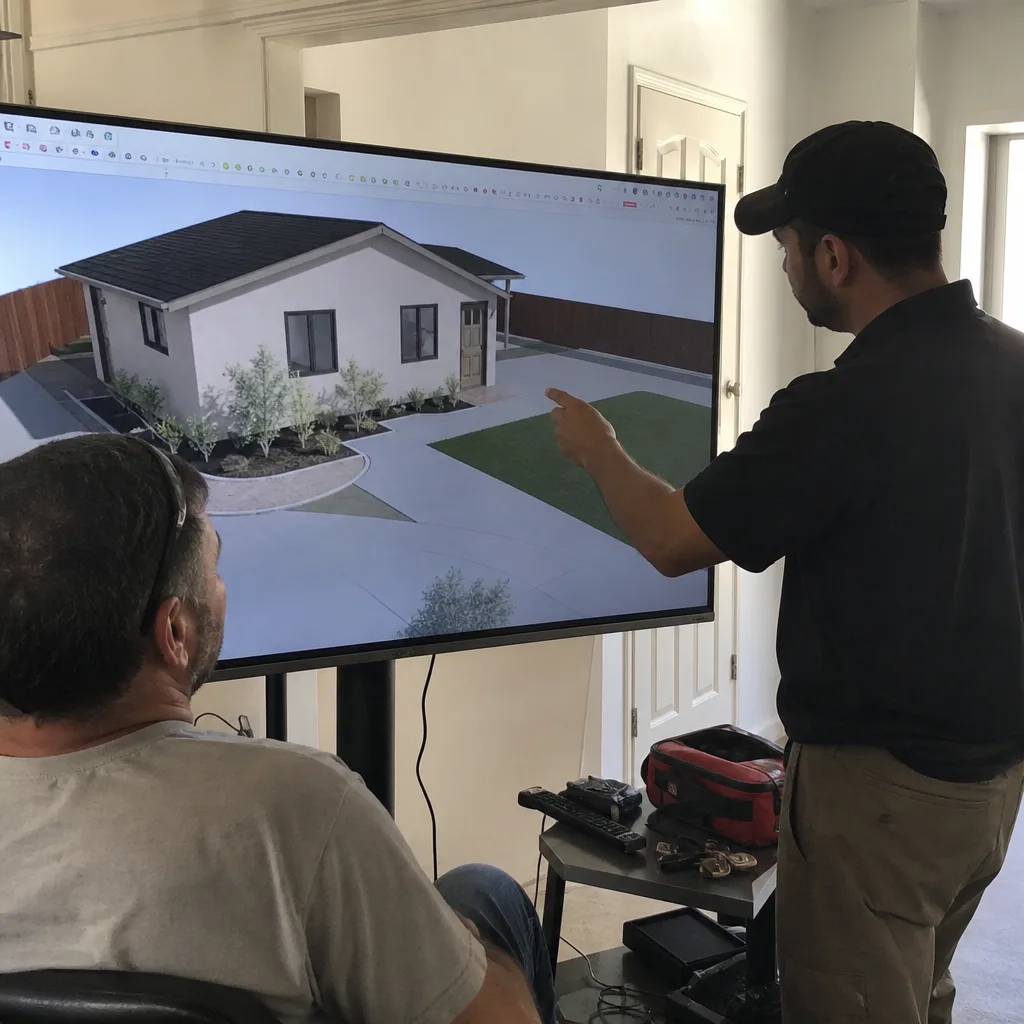
The energy compliance report is not a form to fill out after the design is done. In Zone 10, the compliance requirements shape decisions that happen during design – which direction the windows face, what insulation assembly fits in the existing wall depth, whether a heat pump water heater is required or just recommended. When the design team and the compliance team are the same team, as with our ADU Design & Blueprints process, those decisions get made at the right time and in the right order.
Since 2015, we have designed, permitted, and built more than 900 ADUs under one contract at one written price. Every one of those projects included a Title 24 compliance report produced in-house and filed as part of the complete permit set. We know what Rancho Cucamonga’s Building and Safety Division plan checkers look for, we know the Zone 10 model well enough to flag glazing problems before the drawings are finalized, and we have the construction phase coordination in place to get CF2Rs and CF3Rs signed on schedule.
Our full home page outlines the complete Ellery ADU Studio service model if you want to understand how the single-contract structure works from site assessment through final inspection.
The 365-Day Done Right Promise applies to energy compliance the same way it applies to every other part of the permit set: if the finished ADU does not meet the compliance specifications in the permitted drawings, we make it right. That commitment is in writing before the project starts, not offered after something goes wrong.
Key Takeaways
- Title 24 compliance is required for every conditioned ADU in Rancho Cucamonga – no square-footage exemption applies.
- Rancho Cucamonga sits in California Climate Zone 10, which sets stricter glazing and cooling requirements than coastal zones; a report calibrated for another zone will not pass plan check.
- The compliance report must match the current drawings – any design change after the report is run requires a recalculation.
- Three documents are required across the project lifecycle: CF1R (compliance certificate), CF2R (installation certificate), and CF3R (HERS field verification).
- At Ellery ADU Studio, the Title 24 report is produced in-house as part of the complete permit set – no separate energy consultant to coordinate.
- Every project is quoted at a written price before work begins, per Haven Standard Clause 1; the energy compliance scope is included in that written quote.
- Title 24 compliance for Rancho Cucamonga ADUs typically runs $800 to $2,200 depending on project type and modeling complexity.
To get a written price for your ADU’s Title 24 energy compliance in Rancho Cucamonga, call (909) 506-1121 or search ADU Design & Permitting Near Me in Rancho Cucamonga, CA. A live person will answer – no voicemail, no callback queue – and we can give you a written estimate tied to your specific project before any work begins.
Written by Nadia Ellery, Owner at Ellery ADU Studio Rancho Cucamonga, serving Rancho Cucamonga since 2015.