
Last updated September 25, 2026
ADU Cost Breakdown: The Rancho Cucamonga Homeowner’s Reference for 2026
Most ADU cost estimates fail homeowners not because the initial numbers are wrong, but because they omit the categories that only surface after design is complete. In Rancho Cucamonga, utility connection fees and school impact fees routinely add 12-18% to figures quoted at the first sales meeting. The Rancho Cucamonga Unified School District levies a school impact fee on new ADU construction that as of 2025 runs approximately $4.79 per square foot for residential. That is a fixed, predictable line item that does not appear in any national ADU cost estimator, yet many local contractors bury it under “miscellaneous fees” without naming the number. This guide breaks down every cost category you’ll encounter in a Rancho Cucamonga ADU project, from the first schematic sketch through final inspection, so you can compare quotes with every line item visible. For related guidance, see our ADU Warning Signs: A Rancho Cucamonga Homeowner’s Reference Guide.
Quick Answer
In Rancho Cucamonga, a complete ADU project in 2026 typically ranges from $40,000 for a Junior ADU up to $340,000 for a large detached unit, with garage conversions landing at $90,000-$150,000 and attached ADUs at $160,000-$240,000. These figures include soft costs (drawings, engineering, permits, fees) and hard costs (construction, materials, labor), but only a fixed contract price issued after permit-ready drawings is binding. Budgetary estimates given before design are directional at best.
Table of Contents
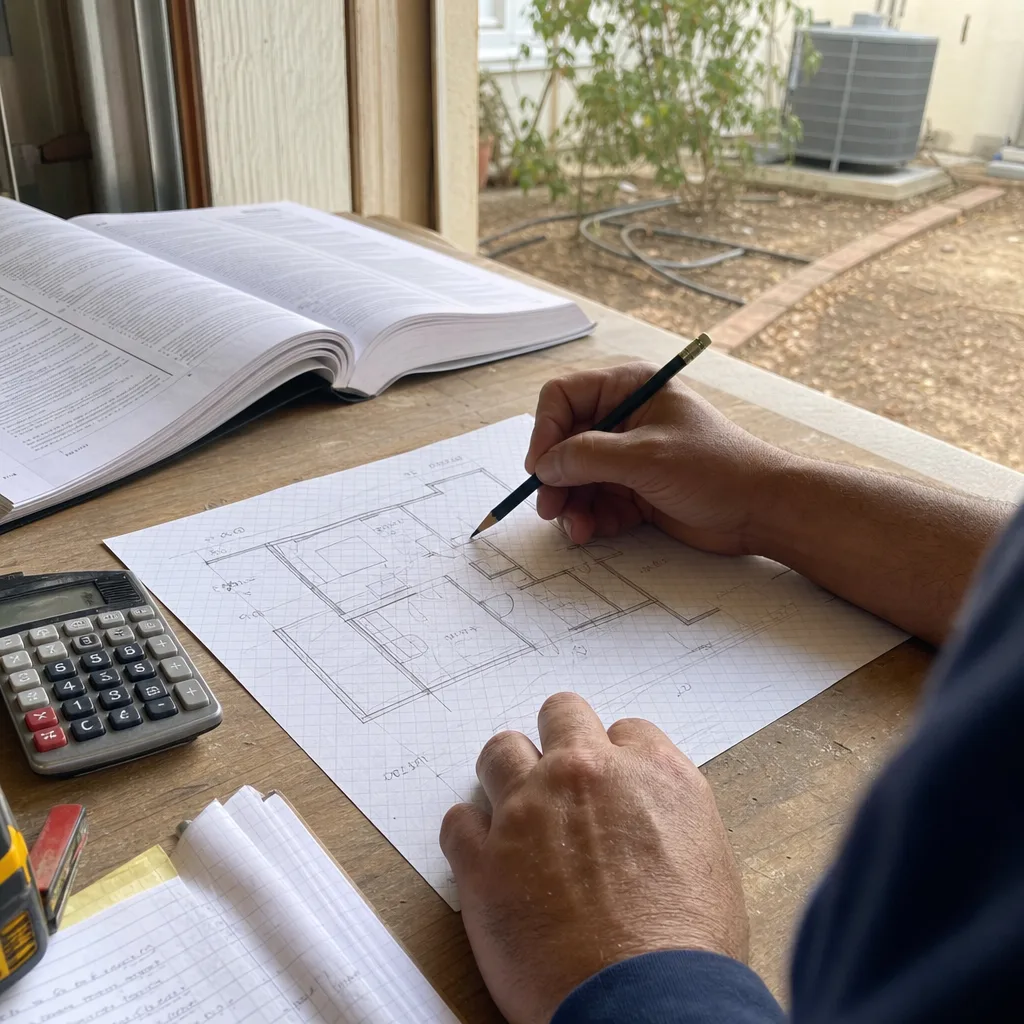
- Hard Costs by ADU Type in Rancho Cucamonga
- Soft Costs Itemized: What Competitors Bury
- The Three Estimates: Budgetary, Design, and Fixed
- The Inland Empire Labor Differential
- CVWD and School Impact Fees: Rancho Cucamonga’s Hidden Line Items
- Financing Options for 2026
- Single-Contract Design-Build vs. Architect Plus GC
- Prefab and Modular Systems: Where They Fit
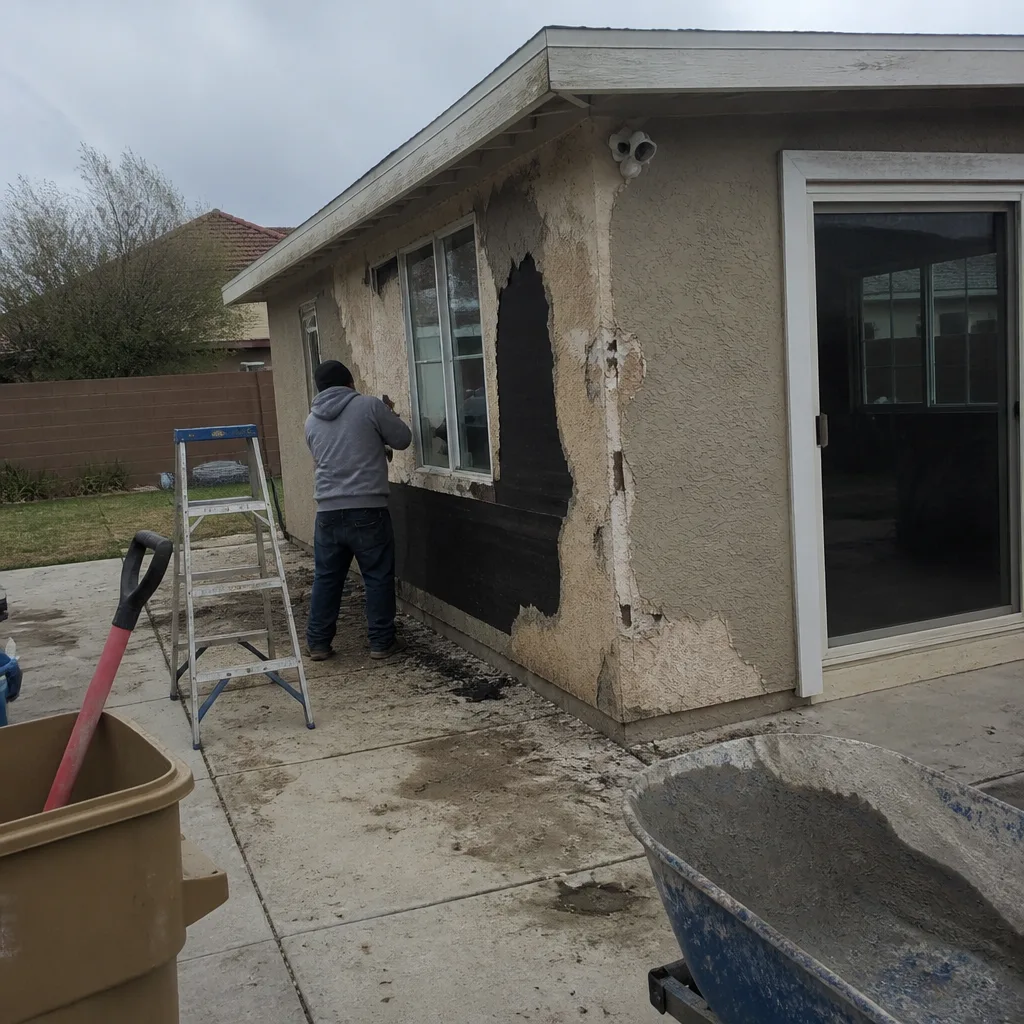 Before
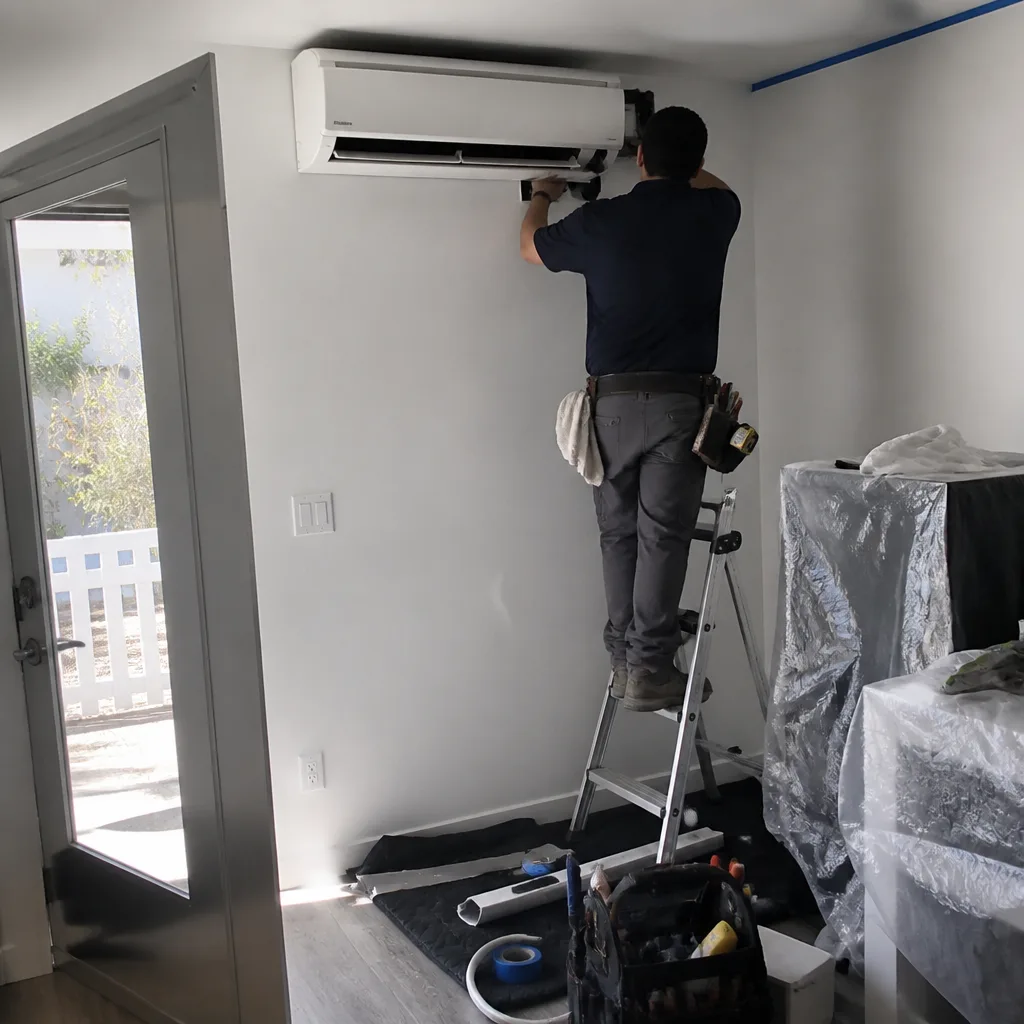 After
AfterHard Costs by ADU Type in Rancho Cucamonga
Hard costs cover everything physical: foundation, framing, roofing, electrical, plumbing, HVAC, insulation, drywall, flooring, fixtures, and finishes. In Rancho Cucamonga’s Inland Empire market, labor rates run 15-25% below LA County, but material costs track closer to regional averages due to supply-chain consolidation out of Ontario and Colton distribution centers.
Here are the all-in ranges we see for completed projects in Rancho Cucamonga, from foundation pour through final paint:
| ADU Type | Square Footage | All-In Hard Cost Range |
|---|---|---|
| Junior ADU (JADU) | 150-500 sq ft | $40,000-$80,000 |
| Garage Conversion ADU | 400-600 sq ft | $90,000-$150,000 |
| Attached ADU | 500-1,000 sq ft | $160,000-$240,000 |
| New Detached ADU | 500-1,200 sq ft | $200,000-$340,000 |
These ranges assume standard finishes, single-story construction, and no significant site complications. A JADU stays low because it uses the existing home’s systems and foundation. A garage conversion avoids new foundation work if the slab is adequate, which is why we always start with a slab assessment. In the North Rancho Cucamonga foothills, we’ve seen garage slabs poured in the 1980s at 3.5 inches, below the 4-inch minimum for residential conversion; that triggers a $8,000-$15,000 foundation upgrade that doesn’t appear in a phone estimate.
New detached ADUs carry the full cost burden: new foundation, new roof, new utilities run from the street or main house, and full fire separation per California Building Code Chapter 3. The upper end of the range typically reflects: steep site grading in the Day Creek or Etiwanda areas, extended utility trenching on deep lots in the older Victoria Groves sections, or upgraded finishes specified by the owner.
We specify garage conversion ADUs in Rancho Cucamonga with a full structural evaluation before any price is written. Under Haven Standard Clause 1, that written price includes the slab assessment finding, not a contingency allowance that disappears into overhead.
Soft Costs Itemized: What Competitors Bury
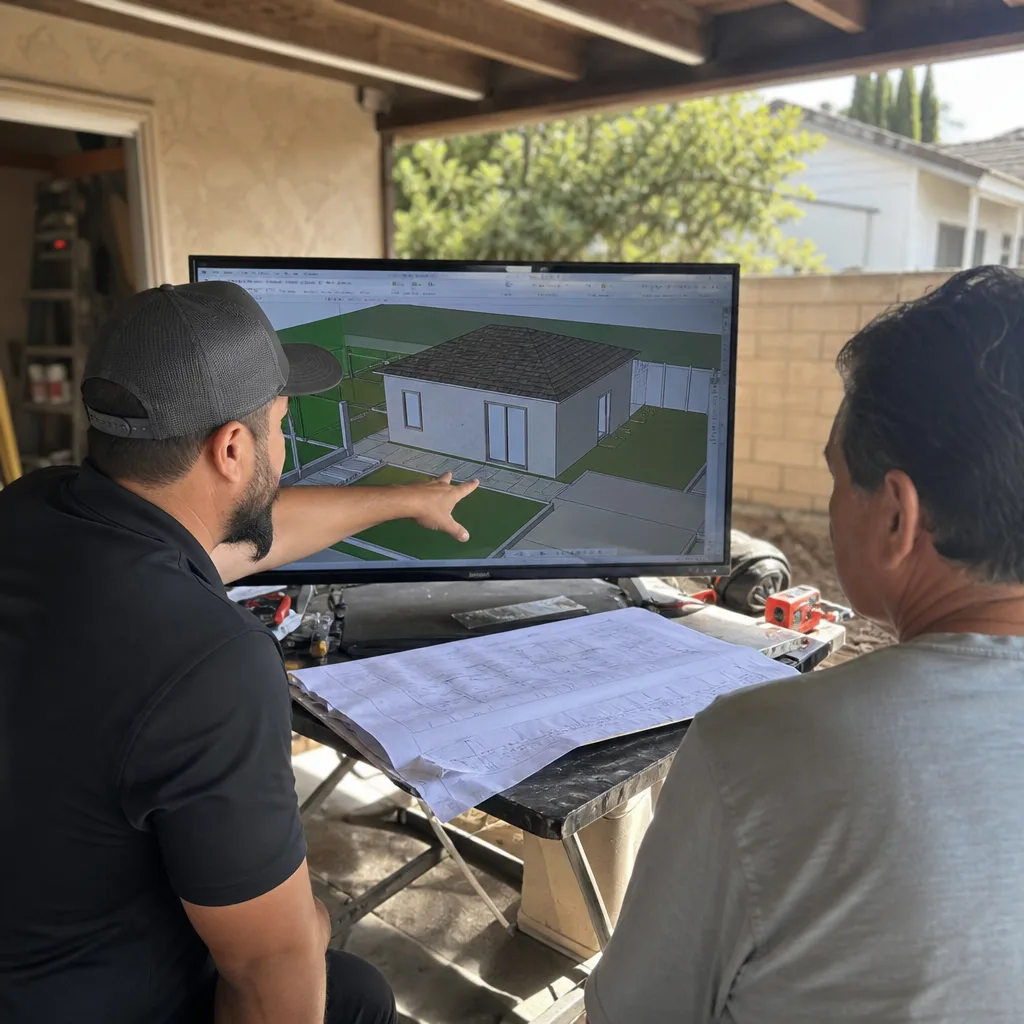
Soft costs are the professional services, regulatory fees, and administrative expenses that precede construction. In our experience across 900+ ADU projects, soft costs typically run 18-28% of total project cost in Rancho Cucamonga, higher for smaller projects where fixed fees don’t scale down proportionally. For a deeper look at permits and regulatory requirements, see ADU Permits, Codes & Inspections in CA: What You Need to Know.
Here’s the itemization we provide on every written quote:
- Architectural drawings and permit set: $4,500-$12,000 depending on complexity. A JADU at the low end; a detached ADU with roofline complications or hillside grading at the high end. This is the core product at Ellery ADU Studio, not an afterthought.
- Structural engineering: $1,500-$4,500. Required for any modification to load-bearing elements, foundation work, or hillside construction. In Rancho Cucamonga’s Zone 4 seismic area, engineering is non-negotiable and city plan checkers verify calculations against the 2022 California Building Code.
- Title 24 energy compliance report: $800-$1,800. California requires energy modeling for all new conditioned space. For conversions, we often use the prescriptive package if the envelope is simple; for detached units, performance modeling is typical.
- Soils report (if required): $2,000-$4,500. Triggered by hillside construction, expansive clay soils in certain North Rancho Cucamonga tracts, or when the city geotechnical reviewer flags conditions during plan check.
- Permit fees: $3,500-$8,000. Rancho Cucamonga’s building permit fees scale with valuation. A $150,000 garage conversion runs roughly $4,200 in permit fees; a $300,000 detached ADU approaches $7,500.
- School impact fees: $4.79 per square foot (Rancho Cucamonga Unified School District, 2025 rate). A 750 sq ft ADU = $3,593. This is a fixed, knowable number that should appear on every estimate. Many contractors don’t name it.
- Water and sewer connection fees (CVWD): $4,200-$12,000. Cucamonga Valley Water District charges capacity and connection fees that vary by meter size and whether the ADU shares a meter or requires a dedicated service. On large detached units with full kitchens, a separate 1-inch meter is often required.
- Fire sprinkler hydraulic calculation (if triggered): $1,200-$2,500. Required when the ADU exceeds certain size thresholds or when the main home’s system must be upgraded to accommodate flow.
- Survey: $800-$1,500. Needed to verify setbacks, especially on older lots where recorded dimensions don’t match fences or existing structures.
Total soft cost range for a typical Rancho Cucamonga project: $18,000-$45,000 before any nail is driven. On a $120,000 garage conversion, that’s 15-25% of total cost. On a $60,000 JADU, soft costs can push 35% because the fixed fees don’t shrink with scope.
Under Haven Standard Clause 5 (No Surprises), every soft cost is named and capped at signing. No “allowances” that evaporate, no TBD line items that become change orders.
The Three Estimates: Budgetary, Design, and Fixed
Homeowners in Rancho Cucamonga receive three fundamentally different numbers during an ADU project. Understanding which is which protects you from the most common financial shock in residential construction: the gap between the number you heard first and the number you pay last.
1. The Budgetary Estimate
This is the number given at the first meeting, often before any site visit, based on square footage multipliers and regional averages. It is useful for feasibility, useless for financing, and dangerous if treated as a ceiling. A contractor might say “$150 per square foot” for a garage conversion; at 500 square feet, that’s $75,000. But that number excludes soft costs, excludes the slab upgrade, excludes the CVWD connection fee, and assumes standard finishes when you specified quartz counters and mini-split HVAC.
We provide budgetary estimates only when explicitly requested, and we label them “directional only, not for construction or lending decisions.”
2. The Design Estimate
Issued after schematic design, when the footprint, roofline, and major systems are defined but before engineering and permit-ready drawings. This number carries 10-15% contingency because unknowns remain: exact structural requirements, final Title 24 compliance path, and permit fee adjustments after plan check comments.
The design estimate is appropriate for pre-qualification with lenders but is not binding. Some design-build firms and architects issue this as a “firm quote,” which creates friction when the final number drifts upward.
3. The Fixed Contract Price
Issued after permit-ready drawings are complete, engineering is stamped, and all regulatory fees are verified with Rancho Cucamonga Building & Safety and CVWD. This is the only binding number. At Ellery ADU Studio Rancho Cucamonga, this is the only number we issue under Haven Standard Clause 1: a written price before any work starts, with every line item visible and no contingency held in reserve.
The gap between budgetary and fixed is where most ADU projects stall or fail. We’ve reviewed competitor estimates where a $95,000 budgetary figure became a $142,000 fixed contract - a 49% increase - because soft costs were excluded and hard costs were based on 2019 material pricing. Our process eliminates that gap by refusing to issue a written price until the permit set is complete.
The Inland Empire Labor Differential
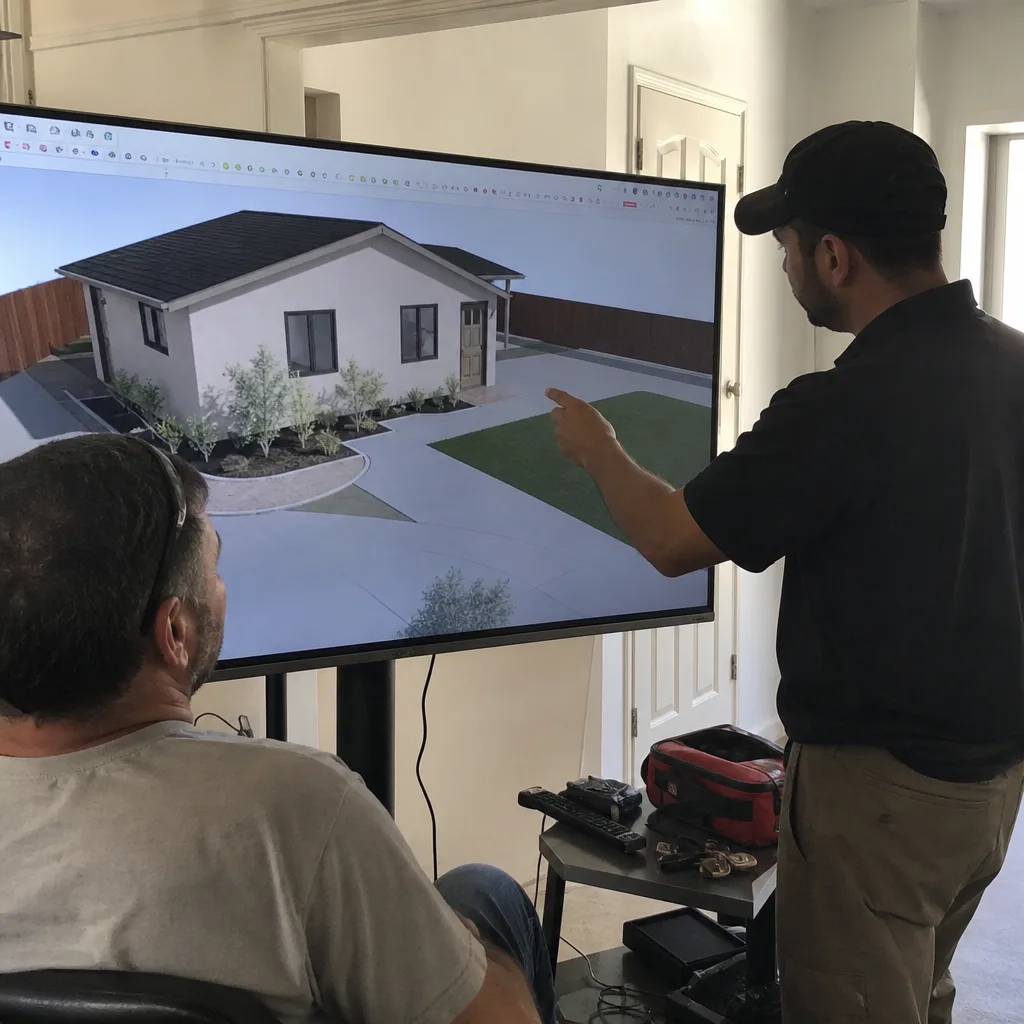
Rancho Cucamonga sits in San Bernardino County’s western edge, with labor pools drawing from Ontario, Fontana, Rialto, and the broader Inland Empire. This matters for your budget in specific, measurable ways.
Framing crews in the Inland Empire typically bill 15-22% below comparable LA County or Orange County rates. Electrical and plumbing trades show a narrower gap, 8-12%, due to licensing portability and union scale minimums that cross county lines. Finish carpentry and tile work show the widest spread, with skilled craftspeople in Rancho Cucamonga and Upland often 25% below Westside LA equivalents.
But the differential cuts both ways. Specialty trades - fire sprinkler installation, Title 24 HERS raters, structural steel fabricators - are thinner on the ground. When a project requires a specialty skill, travel time and minimum call-out charges can erase the Inland Empire savings. In the Terra Vista and Haven View areas, we’ve seen fire sprinkler contractors based in Corona or Riverside charge trip fees that add $400-$600 per visit because no local specialist holds the required C-16 license.
Material costs show less geographic variation. Lumber, concrete, and standard fixtures move through distribution centers in Ontario and Colton, with pricing tied to commodity indexes rather than local labor markets. The exception is delivery: a concrete pour in the northern foothills with limited truck access may incur a $300-$500 pump truck charge that flatland projects avoid.
For homeowners comparing quotes, the labor differential means a Rancho Cucamonga project should not be priced at LA County square-foot rates without explicit justification. If your quote assumes West LA labor pricing, you’re overpaying. If it assumes Tijuana labor pricing with no license verification, you’re exposed. We background-check and verify every trade partner’s license number, which appears on every project document.
CVWD and School Impact Fees: Rancho Cucamonga’s Hidden Line Items
This is where national ADU cost guides fail Rancho Cucamonga homeowners entirely. Two local fees - school impact and water connection - are knowable, fixed, and routinely omitted from initial estimates.
Rancho Cucamonga Unified School District Impact Fee
California Government Code Section 65995 allows school districts to levy fees on new residential construction. The Rancho Cucamonga Unified School District adopted a rate of approximately $4.79 per square foot for residential ADUs as of 2025. For context:
- 400 sq ft JADU: $1,916
- 600 sq ft garage conversion: $2,874
- 750 sq ft detached ADU: $3,593
- 1,200 sq ft detached ADU: $5,748
This fee is due at permit issuance, not at final inspection. It is not negotiable, not waivable for “affordable” ADUs unless specifically enrolled in a state subsidy program, and not optional. Yet we regularly review estimates from other providers that list it as “TBD” or fold it into a generic “permits and fees” allowance with no breakdown.
Cucamonga Valley Water District Connection Fees
CVWD charges two categories of fees for ADUs: capacity fees (buying into the system) and connection fees (physical tap installation). The combined total varies by service size:
- Meter share with main house (no new meter): $4,200-$5,800. Requires hydraulic analysis showing adequate flow for both units. Common for JADUs and small garage conversions.
- New 3/4-inch meter: $7,500-$9,200. Typical for detached ADUs up to 800 sq ft with standard fixtures.
- New 1-inch meter: $10,500-$12,000. Required for larger detached units, multiple bathrooms, or when fire flow calculations demand higher capacity.
CVWD also requires a separate sewer connection fee, typically $1,800-$2,400, unless the ADU connects to an existing private septic system (rare in Rancho Cucamonga’s built areas).
These are not “gotchas.” They are published fee schedules, available from CVWD’s engineering department. The only reason they surprise homeowners is that many contractors don’t name them early. For a complete maintenance and compliance roadmap, see our ADU Design & Permitting Maintenance Checklist for Rancho Cucamonga Homeowners. Under Haven Standard Clause 3 (Full Disclosure), every utility fee is verified with the district and listed at the fixed-price stage, not discovered at permit pull.
Financing Options for 2026
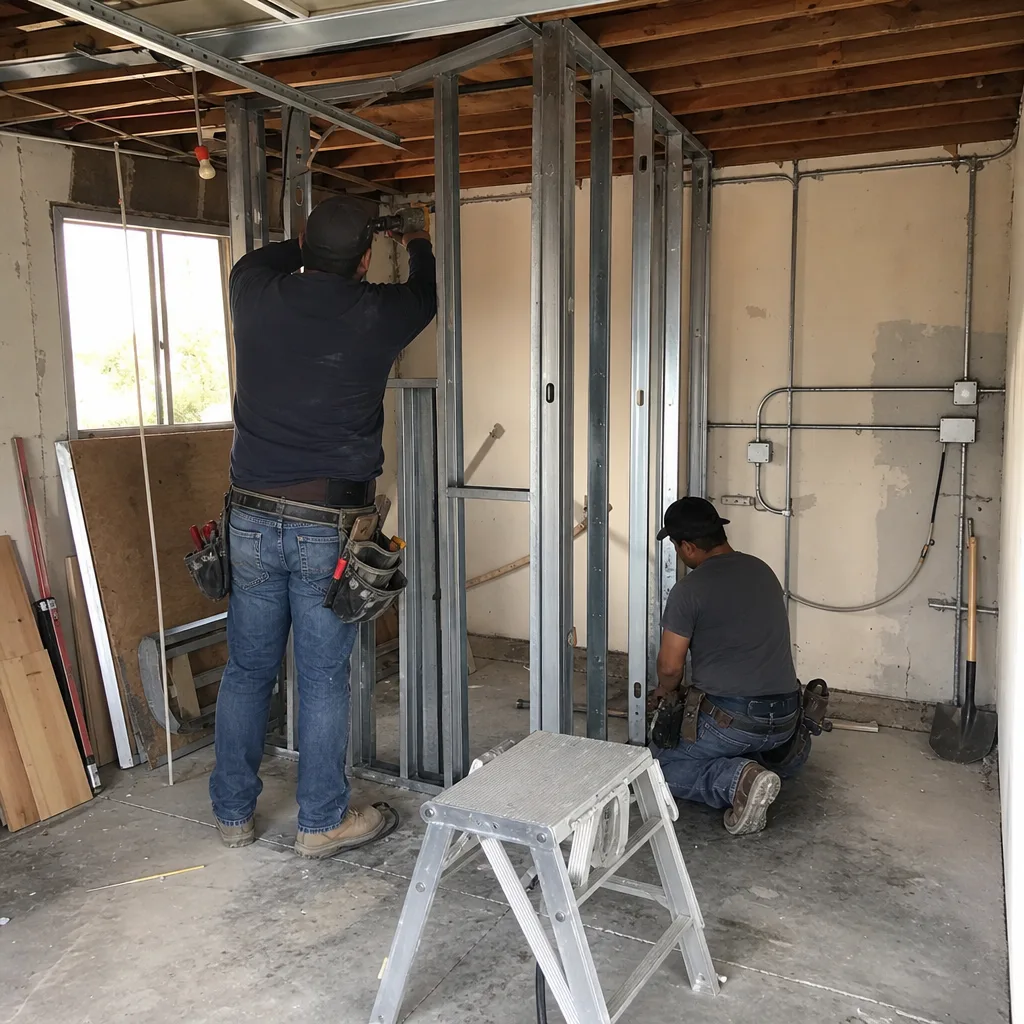
ADU financing has matured significantly since 2020. For Rancho Cucamonga homeowners in 2026, four primary paths exist, each with implications for how and when you receive a binding price.
1. ADU-Specific Construction Loans
Several lenders now offer products designed for ADUs, with draw schedules tied to permit issuance, rough inspection, and final rather than traditional construction milestones. These loans typically cover 80-90% of project cost, require a fixed contract price for underwriting, and fund in 30-45 days. The key advantage: the lender recognizes ADU rental income in debt-to-income calculations, improving qualification for homeowners with strong equity but limited W-2 income.
2. Home Equity Line of Credit (HELOC)
For homeowners with significant equity after 2015-2025 appreciation, a HELOC offers flexibility and speed. Draw as needed, pay interest only during construction, then convert to amortizing. The risk: variable rates in 2026’s environment, and the temptation to draw beyond the project scope. We recommend securing the HELOC before design begins, then locking the fixed contract price against that committed capacity.
3. Cash-Out Refinance
Appropriate when current rates are favorable versus the existing mortgage, or when the homeowner wants to consolidate debt. The 30-45 day closing timeline means this must begin before permit submission, as Rancho Cucamonga Building & Safety will not hold a permit indefinitely while financing arranges.
4. CalHFA ADU Grant Program
The California Housing Finance Authority offers grants up to $40,000 for ADU construction, with eligibility tied to income limits and owner-occupancy requirements. For Rancho Cucamonga homeowners, the relevant income threshold is typically 120% of San Bernardino County Area Median Income. The grant funds predevelopment costs - drawings, permits, site prep - and requires a completed application before construction begins. Processing times have improved but still run 60-90 days; we coordinate grant applications with our permit timeline to prevent delays.
Critical point for all financing: lenders require a fixed, written price for loan approval. A budgetary estimate will not suffice. A design estimate may suffice for pre-qualification but will trigger re-underwriting when the final number arrives. Our single-contract model, with its fixed price issued after permit-ready drawings, aligns precisely with lender requirements - no gap, no re-qualification, no construction delay.
Single-Contract Design-Build vs. Architect Plus GC
The structural difference in pricing models is the single largest factor in cost overrun risk. Understanding this protects Rancho Cucamonga homeowners from the blame gap that derails most ADU projects.
The Architect-Plus-GC Model
Homeowner hires an architect for $8,000-$20,000. Architect produces drawings. Homeowner solicits bids from 2-3 general contractors. GCs bid on the drawings, each interpreting gaps and ambiguities differently. Lowest bid wins. Construction begins. Field conditions emerge: the slab is thinner than as-built records suggest, the electrical panel lacks capacity, the roofline intersection creates an unplanned waterproofing challenge. GC points to drawings; architect points to site conditions; homeowner pays the change order.
In our review of failed ADU projects in Rancho Cucamonga and surrounding cities, the architect-GC blame gap accounts for 60% of cost overruns exceeding 20%. The drawings were “complete enough for permit” but not complete enough for construction. The GC’s bid assumed standard conditions that the site didn’t meet. Neither party was wrong; neither was accountable.
The Single-Contract Design-Build Model
At Ellery ADU Studio Rancho Cucamonga home, the same entity produces the permit set and builds the project under one contract at one written price. The permit set is the core product because it is the foundation of the fixed price. If the slab is 3.5 inches, we find it during design and the foundation upgrade is in the written price, not a change order. If the electrical panel is maxed, we specify the service upgrade in the permit set and it is in the written price.
The Haven Standard Clause 5 (No Surprises) locks scope at signing. If we missed a condition that a reasonable site investigation should have caught, we absorb the cost. The 365-Day Done Right Promise means if the finished ADU is not built to the permitted drawings, we make it right - in writing, before the project starts.
This model eliminates the categories of cost that typically overrun: design gaps, site condition surprises, and scope creep from ambiguous drawings. The price is higher than the lowest GC bid on incomplete drawings, but it is the price you pay, not the price you start from.
Prefab and Modular Systems: Where They Fit
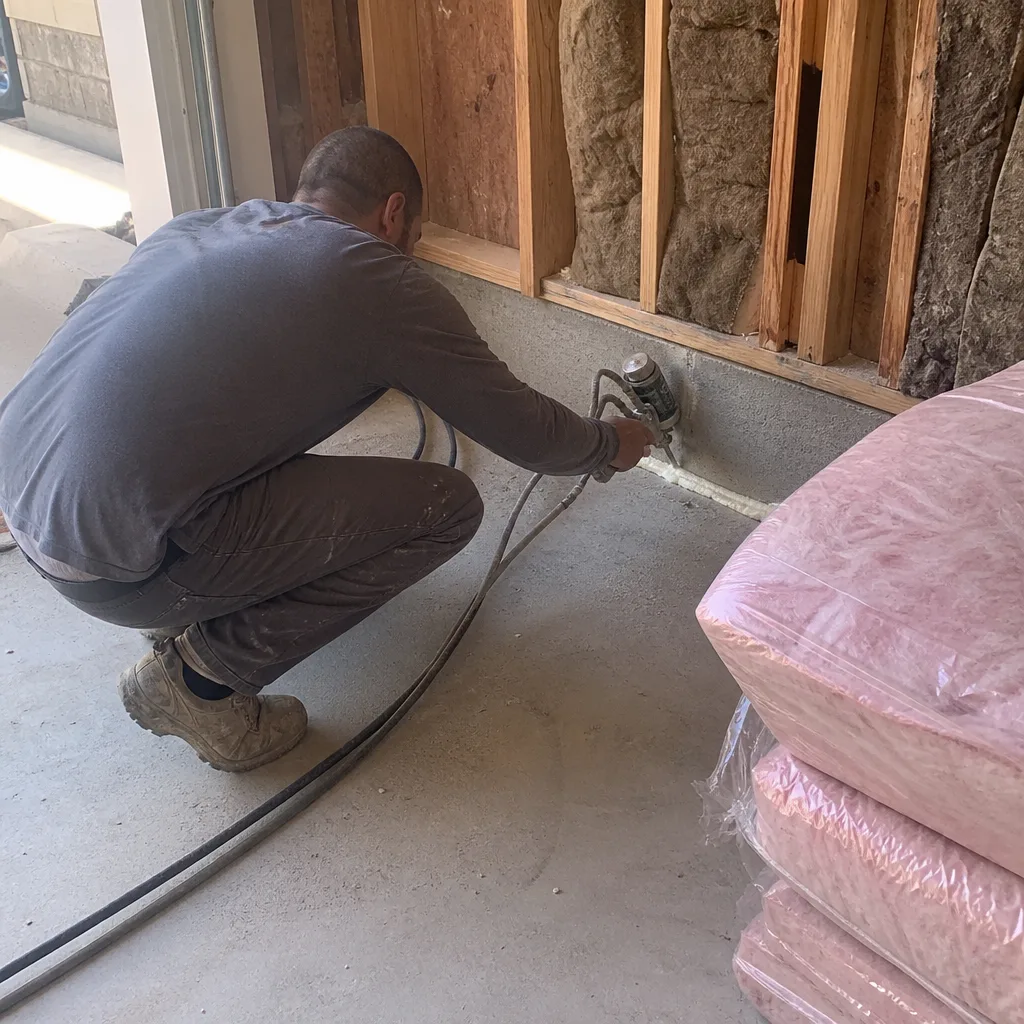
Prefab and modular ADUs have matured beyond the novelty stage. For Rancho Cucamonga homeowners, they offer specific advantages and constraints that affect total project cost in ways that site-built estimates rarely capture accurately. Explore more guides & resources on ADU planning and construction.
We specify and coordinate prefab and modular systems from brands including Plant Prefab, Tuff Shed, James Hardie, and Abodu, integrated within the same single contract. This matters because many prefab providers sell the module only, leaving the homeowner to coordinate site prep, foundation, utility connections, and final inspection - the categories where costs overrun most.
When Prefab Reduces Cost
- Tight sites with limited staging area: factory construction eliminates material delivery and storage logistics.
- Accelerated timeline: modules arrive 70-80% complete, compressing on-site construction from 4-6 months to 6-10 weeks.
- Quality control: factory conditions reduce weather delays and installation variances.
When Prefab Increases Cost
- Transportation: modules over 14 feet wide require Caltrans permits, pilot cars, and route surveys. From Plant Prefab’s Rialto-adjacent facility, this is manageable; from out-of-state manufacturers, freight can add $8,000-$15,000.
- Crane and set: a mobile crane for module placement runs $3,500-$6,000 per day in the Inland Empire market.
- Foundation matching: the module’s structural points must align precisely with the foundation anchor bolts. Tolerance is tighter than site-framed construction; field adjustments are limited.
- Utility rough-in timing: electrical, water, and sewer stub-outs must be precisely located before the module arrives. Rework is expensive and often inaccessible.
Total project cost for a prefab detached ADU in Rancho Cucamonga typically falls within the same $200,000-$340,000 range as site-built, with the module itself representing 45-55% of total cost versus 35-40% for site-built materials. The savings are in time and predictability, not necessarily in dollars. For homeowners in the Foothill Corridor or Day Creek areas with HOA aesthetic requirements, Tuff Shed’s site-built appearance with factory precision, or James Hardie’s siding systems, can satisfy design review while maintaining modular efficiency.
We evaluate prefab feasibility during schematic design, not as an afterthought. If the access route won’t accommodate transport, or the foundation conditions don’t suit modular tolerances, we know before any deposit is committed.
Common Mistakes to Avoid
- Treating a budgetary estimate as a ceiling. The $75/sq ft number from a blog post or initial phone call is not your project cost. Only a fixed contract price after permit-ready drawings is binding.
- Ignoring CVWD and school impact fees in early budgeting. These are fixed, knowable, and total $8,000-$18,000 on typical projects. Estimates that list them as “TBD” are not transparent.
- Starting construction before permit approval. Rancho Cucamonga Building & Safety will issue a stop work order, and the penalty is typically 200% of the permit fee plus required engineered remediation. We’ve seen this add $15,000-$30,000 to projects that tried to “get ahead” of the permit timeline.
- Assuming a garage conversion needs no engineering. Every garage conversion in Rancho Cucamonga’s Zone 4 seismic area requires structural evaluation of the existing slab, walls, and roof diaphragm. Skipping this to save $2,000 risks a plan check rejection that costs six weeks.
- Choosing the lowest GC bid on incomplete drawings. The low bid assumes the most favorable conditions. When reality differs, the change orders arrive. The total often exceeds the higher, complete bid.
- Neglecting the rental income timeline in financing decisions. A HELOC starts charging interest immediately; a construction loan typically funds in draws. Match your financing structure to your rental income start date.
- Overlooking HOA restrictions in newer Rancho Cucamonga developments. Terra Vista, Haven View, and similar planned communities often have CC&Rs that restrict ADU size, placement, or exterior finishes. Review these before design begins; retrofitting compliance into completed drawings costs $3,000-$8,000 in redesign.
When to Call a Professional
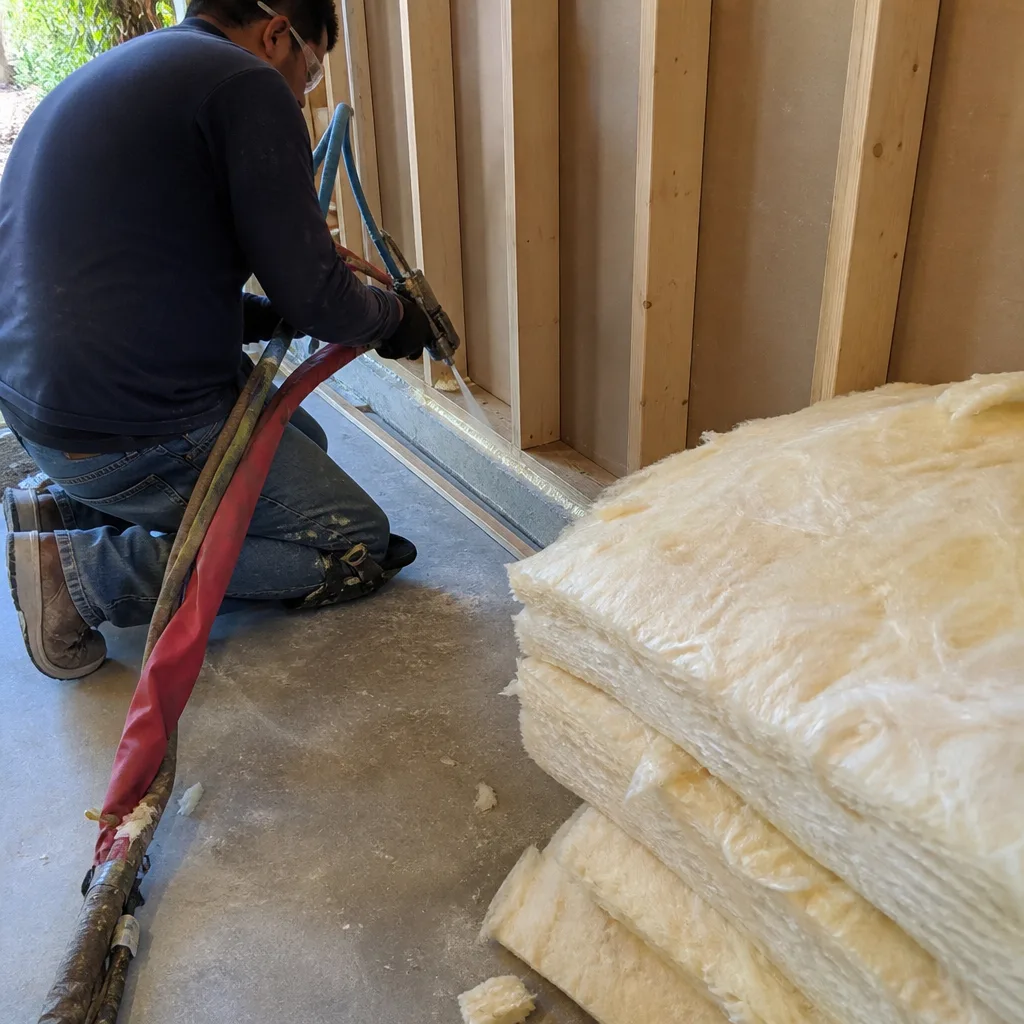
Call a design-build professional when you need a fixed, binding price for financing or construction decisions; when your site has complications like hillside location, expansive soils, or utility constraints; when you’ve received a written estimate from another provider and want a Free Second Opinion on its completeness; or when you value a single point of accountability rather than navigating the designer-versus-builder blame gap.
Ellery ADU Studio Rancho Cucamonga offers free estimates in Rancho Cucamonga. Every estimate includes a preliminary site assessment, a review of applicable fees with Rancho Cucamonga Building & Safety and CVWD, and a written scope with no obligation. Call (909) 506-1121 to schedule.
Frequently Asked Questions
A complete ADU in Rancho Cucamonga ranges from $40,000 for a Junior ADU to $340,000 for a large detached unit, with garage conversions at $90,000-$150,000 and attached ADUs at $160,000-$240,000. These all-in figures include soft costs, hard costs, and local fees like CVWD connection and school impact fees. Call (909) 506-1121 for a written fixed price on your specific project - estimates are free.
Estimates change because most providers issue a budgetary number before design, then a design estimate with contingencies, then a final price after discovering site conditions. Only a fixed contract price issued after permit-ready drawings is binding. Under Haven Standard Clause 1, we issue one written price, after design, and it does not change.
The Rancho Cucamonga Unified School District charges approximately $4.79 per square foot for residential ADU construction as of 2025. A 750 sq ft ADU pays roughly $3,593. This fee is due at permit issuance and should appear as a specific line item on every estimate. Call (909) 506-1121 and we’ll verify the current rate for your project size.
Not always, but the existing slab must meet current code minimums. In Rancho Cucamonga, a 4-inch slab with adequate reinforcement is typically acceptable for conversion. We’ve found 1980s slabs in North Rancho Cucamonga at 3.5 inches that required $8,000-$15,000 in upgrades. We assess this during design and include the finding in our written price, not as a later surprise.
From signed contract to final inspection, a garage conversion typically takes 4-6 months, an attached ADU 6-9 months, and a detached ADU 8-12 months. Permit processing through Rancho Cucamonga Building & Safety adds 6-10 weeks for straightforward projects, longer if plan check comments require revision. Prefab modules can compress on-site construction by 40-60% but do not reduce permitting time.
Yes. HELOCs offer flexibility for homeowners with equity; ADU-specific construction loans recognize rental income in qualification and fund against fixed contract prices. The CalHFA ADU Grant Program offers up to $40,000 for eligible Rancho Cucamonga homeowners. All lenders require a fixed, written price for final approval - which is exactly what Haven Standard Clause 1 delivers. Call (909) 506-1121 to discuss how our pricing structure aligns with your financing path.
The Bottom Line
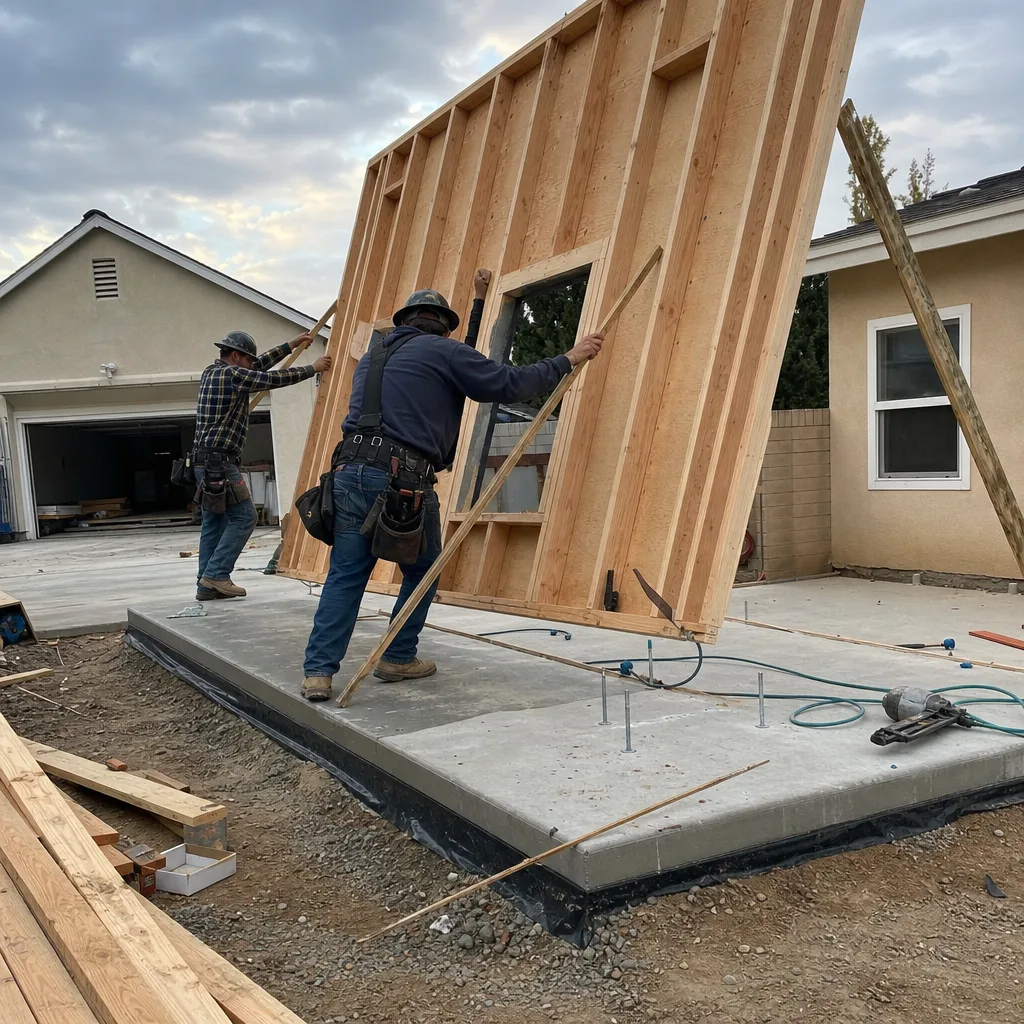
ADU cost accuracy in Rancho Cucamonga depends on three factors: complete soft-cost itemization including CVWD and school district fees, a fixed price issued only after permit-ready drawings, and single-contract accountability that eliminates the designer-builder blame gap. Budgetary estimates serve feasibility; they do not serve construction or lending. The homeowners who avoid overrun are those who demand every line item named, every fee verified with the issuing agency, and every promise backed in writing before work begins. That is the standard we apply to every project at Ellery ADU Studio Rancho Cucamonga.
Written by Nadia Ellery, Owner at Ellery ADU Studio Rancho Cucamonga, serving Rancho Cucamonga since 2015.